NAGC25 Session Review: Bite Size Arts Integration Strategies to Have Learners Wanting More

Presented by Amanda O’Neil and Bobbie Parmann, Las Vegas Charter School Gifted Educators
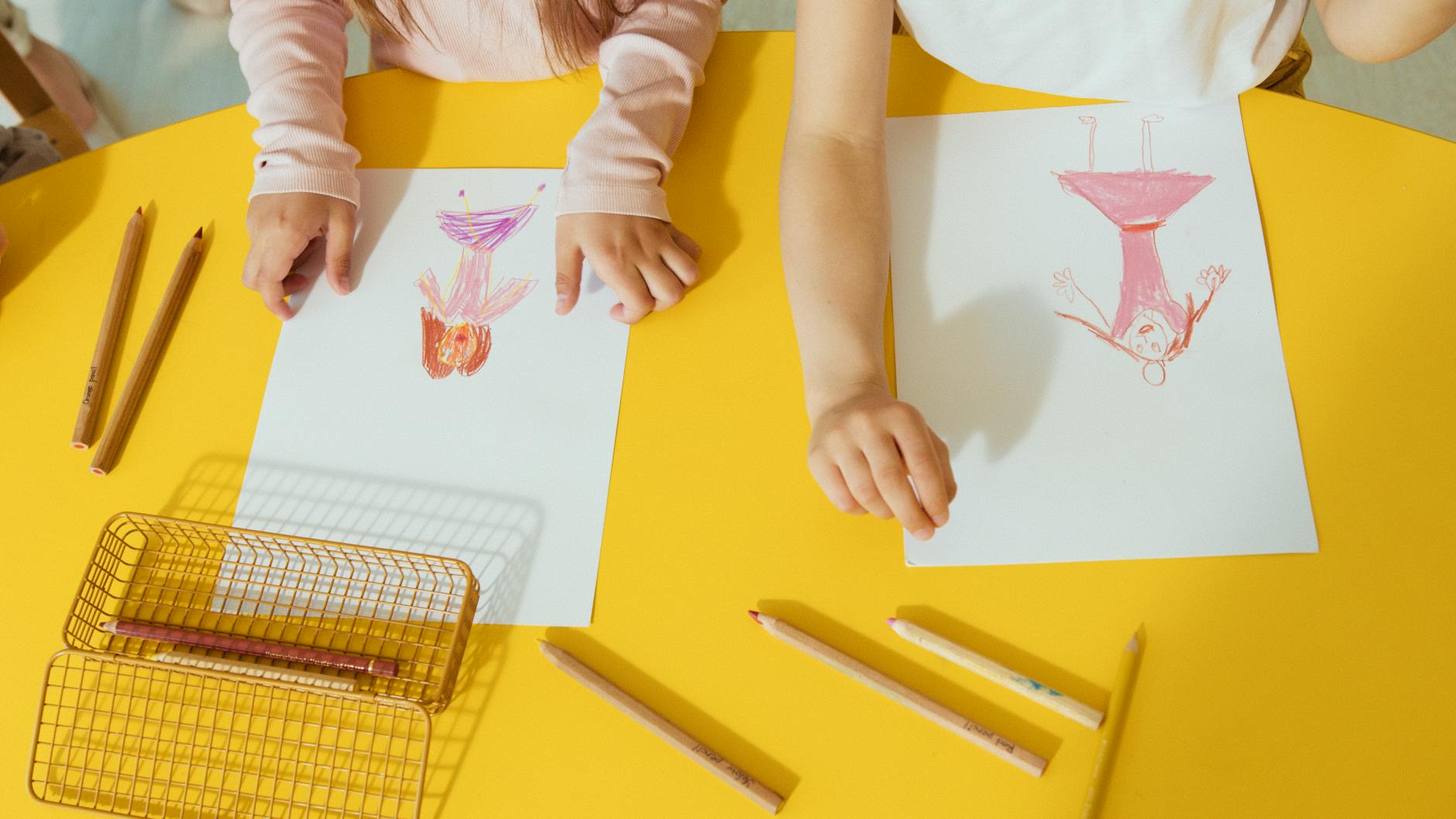
Photo by Artem Podrez on Pexels.com

At NAGC25, I had the chance to sit in on a session that reminded me why the arts should never sit on the sidelines of our instructional planning. Amanda O’Neil and Bobbie Parmann shared practical, bite size arts integration strategies they use every day in their fully arts integrated charter school. Their message was clear. When students actively create, interpret, and express ideas through the arts, they deepen their understanding in powerful and joyful ways. The teachers in their building see the difference in student engagement, confidence, and achievement because the arts are used as tools for thinking, not extra activities added to the end of a lesson.

Before diving into specific strategies, the presenters opened with a simple tool many of us know but often forget to use- Mood Meters. These inclusive openers invite every student into the learning space and give them vocabulary for self-awareness. You can make your own or find dozens of examples online. They set the stage for community, emotional regulation, and a classroom culture that values every student’s starting point.

So, why arts integration? Their school is fully immersed in it, and that means they have seen the long-term impact of arts integration first-hand. Arts integration is a teaching strategy that combines an art form with another content area so students can learn and demonstrate their understanding in new ways. The goal is for students to use the arts to make meaningful connections. Research continues to show that students in arts-integrated settings often outperform peers on assessments and tend to have stronger social skills, better behavior, and higher attendance (read a few articles about arts integration here and here and here).

Below are eight bite size strategies shared by O’Neil and Parmann that any teacher can bring into tomorrow’s lesson. They work beautifully for gifted and high ability learners who crave novelty, open-ended thinking, and creative expression.

1. “Reading” Music

Music is a universal language that helps students connect with story, emotion, and tone. This strategy invites students to listen to a piece of music, then answer a series of imaginative questions:

  • Is the main character human or not human?
  • What kind of clothing might they wear?
  • What is the setting?
  • What are they doing?

Students essentially craft a narrative from sound. It is perfect for novel studies. You can build a playlist for each chapter and ask students to justify their choices with textual evidence.

2. Portrait Study

Portraits are rich sources of inference, symbolism, and perspective. Students observe a portrait for two full minutes while paying attention to expression, setting, and objects. After students notice details, they discuss what those details reveal. Finally, they link the portrait to their lesson. This can deepen understanding in history, character study, and even science.

3. One Minute Tableau

Students create a frozen scene with their bodies to represent a topic. There is no talking, and each tableau should include a variety of levels.

Steps:

a. Assign a topic
b. Groups plan their roles and poses quickly
c. Students freeze for 10 to 20 seconds
d. Classmates interpret the tableau and connect it to the concept
e. Add options like evidence guessing, thought tapping, or accents

Teachers can use tableaux for character perspectives, historical debates, life cycles, equations in action, shapes, or storytelling sequences. Gifted students especially enjoy the problem solving, physical reasoning, and creativity this requires.

4. Six Word Story

Students summarize a big idea, event, or character arc using only six words. They must include a picture or very intentional facial expression to enhance the story.

Steps:

  1. Identify the basic theme
  2. Add imagery and an element of mystery
  3. Refine tone and depth

Students can illustrate their six word stories or bring them to life through a tableau or short skit. This strategy supports precision, vocabulary, and synthesis.

5. Collaborative Doodle

Each student chooses a colored pencil, draws a noun in the center of the page, then passes it around while others add to it.

Steps:
a. Group 3 to 5 students
b. Draw the noun in the center
c. Pass the paper until each student has contributed

Benefits include stress relief, vocabulary development, visual thinking, collaborative creativity, and perspective taking. This is one of the most versatile brain breaks because it builds community while exercising cognitive flexibility.

6. On and Off

This strategy uses physical expression as a form of response. The teacher gives a prompt, then students demonstrate their answer through facial expressions, poses, size, energy, or levels. This works well in any area of content and is especially useful for kinesthetic learners.

7. Zoom In Picture

Reveal a close up portion of an image related to the day’s topic. Students infer what it might be and how it connects to the lesson. Teachers can then ask specific, open-ended questions about what the students think the image is as more of it is slowly revealed. This supports divergent thinking, abstraction, and careful observation and can be an ideal strategy for warmups or discussion starters.

8. Improvised Expert

Students pretend to be an expert on an invented topic connected to the lesson. They answer classmates’ questions in character while weaving in vocabulary or content knowledge.

Possible imaginary roles:
• Literary Therapist
• Museum Curator from the year 2500
• Animal Communication Specialist
• Expert on why gravity needs a day off
• Museum Lighting Designer for a historical painting

This activity invites humor, encourages risk taking, and builds conceptual understanding through playful improvisation.

Arts integration does not require a full schedule redesign. It starts with small, thoughtful routines that invite students to think and communicate in new ways. These strategies remind us that creative expression is not an add on. It is a pathway to deeper learning for all students and a particularly energizing fit for gifted and high ability learners. Let your next unit begin with a sketch, a song, or a freeze-frame. Your students will surprise you with what they can do! And if you are already integrating arts strategies into teaching and learning in your classroom, please share a strategy or two in the comments below! Thank you! ~Ann
#NAGC25 Session Review: How Blockbridge Increased Identification of Historically Underrepresented Groups by 16x

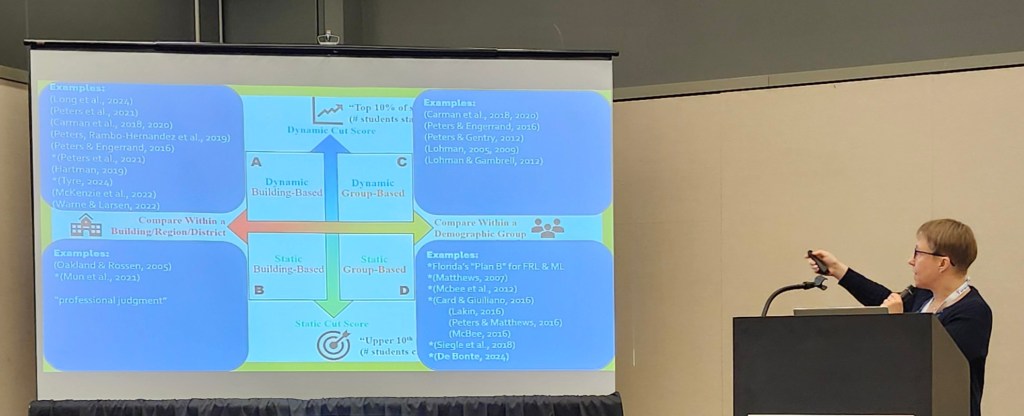
Slide of research about various ways to use norms in gifted identification.

At this year’s NAGC25 Annual Convention, one of the sessions that stayed with me was Dr. Austina De Bonte’s presentation on how a single Washington school district dramatically increased identification of historically underrepresented gifted students. Many of us know the research. Marcia Gentry and colleagues (2019) documented that countless gifted students are never identified, often due to structural barriers in our systems. We also know the best practice playbook: universal screening, local norms, multiple measures and pathways, thoughtful combination rules, high-quality rating scales, and ongoing professional learning. The challenge is that these practices are rarely implemented comprehensively because they require significant coordination and system-wide commitment.

That is what made the Blockbridge (a pseudonym) case study so compelling. This district achieved a sixteen-fold increase in the identification of underrepresented groups. They also increased the overall size of their gifted program by a factor of four. The obvious question is how did they make this level of change possible?

Dr. De Bonte conducted a qualitative study of the Blockbridge School to learn how they increased their gifted identification of underrepresented student groups so well. She interviewed 28 participants, including district leaders, program administrators, principals, and teachers. Her findings were organized through an educational theory framework and fell into three clusters of themes. Three themes were focused on practices, three on outcomes, and three on attitudes that supported the shift.

What Blockbridge Did

Blockbridge redesigned its identification system in ways that were both comprehensive and highly intentional. They implemented universal screening, used static local norms for students identified as low-income or multilingual, created multiple pathways into the program, and adopted OR rules instead of AND rules. One of their most interesting decisions was to create a first-grade NNAT3-only pathway. Students who met this threshold entered a talent pool and were immediately served in the gifted program. The district believed that when children were given the appropriate environment and expectations, they would rise to meet the challenge. The results confirmed that belief.

Their system used two phases. Phase I was universal screening in math, reading, and nonverbal reasoning. Phase II was deeper testing for students who needed additional data. This work was especially impressive in Washington because the state requires only one criterion for gifted identification, yet Blockbridge dug deeper into student data to find students.

Equity Strategies That Mattered

Several deliberate choices helped Blockbridge move their identification rates for underrepresented students so high:

  • Screening was done during the school day so every child participated (it used to be done on Saturdays).
  • The district implemented operational systems with the precision needed for such a complex process.
  • Universal screening occurred in kindergarten through eighth during the transition years while trying to find the best mix of proceses, then continued only in kindergarten, first, and fifth.
  • Students could qualify in math only, reading only, or in both areas.
  • OR rules allowed students to move forward when any single data point signaled potential (according to Google AI, “An ‘OR rule’ for gifted identification means a student can be identified as gifted if they meet the criteria in at least one of several categories, rather than needing to meet all criteria in a single category).”
  • The NNAT3 pathway opened doors for students whose academic scores had not yet caught up with their ability due to opportunity gaps.

Local Norms

Dr. De Bonte explained the difference between dynamic and static approaches to local norms. Dynamic norms use the top ten percent of students at each school or at the district level, keeping the number of identified students constant. Static norms use fixed cut scores that allow the number of identified students to change. Blockbridge selected static norms that were adjusted for students from low-income and multilingual backgrounds. This decision helped counteract systemic differences in opportunities to learn and was one of the major levers that improved equity.

Matching Students to Services

Blockbridge matched their service model to student needs rather than trying to make identification fit the service structure. Kindergarten and first-grade students received differentiation. In grades two through five, about forty percent of students received in-class differentiation with some math acceleration. The remaining sixty percent participated in accelerated self-contained classrooms. Middle schoolers had access to accelerated sections in core subjects. It was a scalable model that still honored readiness levels.

Professional Development

The district recognized that teachers often rely on personal experience when working with highly capable learners, which can limit consistency. The division actually did very little professional development with teachers regarding gifted identification.

Identification of Special Populations

One of the most notable outcomes of Blockbridge’s evolved gifted identification process was the increase in students identified from special populations including students with Section 504 plans, students receiving special education services, students from low-income households, and multilingual learners. From 2015–2016 to 2022–2023, underrepresented group identification increased sixteen-fold, and overall program participation increased four-fold. The OR rules seemed to boost identification for students with SPED and 504 plans even without static local norms applied to these groups.

Another surprise was how well students performed once identified. Students who qualified via the NNAT3-only pathway performed at similar levels to peers who qualified through traditional achievement-based pathways. In fact, the NNAT3 group was outperforming the achievement group, and none of the identified students were struggling.

How They Made It Happen

Three attitude-based factors emerged as essential.

  • Leadership set the direction from the top-down.
  • The district worked with an expert consultant and stayed aligned with best practice.
  • There was broad support for equity and a shared belief in opportunity and access (Dr. De Bonte reiterated the district leadership’s strong belief in equity multiple times during her session).

Not everything was perfect. As identification numbers grew, some stakeholders questioned the increase. Why were 28 percent of students identified as highly capable? Was this overidentification? Dr. De Bonte reminded us that national research tells us that around 14.9 percent of students are ready for the next level of academic work at any given moment. Many districts are under-identifying gifted students, not over-identifying.

Key Takeaways for School Districts

This was a qualitative study, so the findings are not causal. Even so, the lessons are powerful.

  • Universal screening is necessary but not sufficient. Without local norms, districts will miss students affected by the excellence gap.
  • OR rules significantly improve identification for twice-exceptional learners [and others].
  • Student success data showed that children thrive when placed at their appropriate learning level, including those who entered through non-traditional pathways.
  • Rating scales were not used. Blockbridge relied only on objective measures because they are cost effective, easier to scale, and less likely to be perceived as subjective or unfair.
  • Major systemic change can be driven from the top down. In this case, widespread buy-in was not present at the start.
  • Gifted programs have a moral purpose. Many bright learners already know most of their grade-level curriculum. When school is too easy, they miss opportunities to build learning habits and persistence, and twice exceptional students remain masked.
  • A helpful phrase emerged from this work: “Just Right Learning Level.” School should not be too easy for any child. Equity in gifted education is about ensuring appropriate challenge, not rationing opportunity.

Blockbridge shows what is possible when a district commits to equitable identification at scale. The gains did not come from one strategy. They came from a system of aligned practices carried out with clarity, purpose, and belief in every child’s potential. Dr. De Bonte’s session was a breath of fresh air in the equity conversation!

What experiences has your school districts had with gifted identification of students from underrepresented groups? Share them below in the comments. I’d love to hear how other school districts are working on this issue. ~Ann

#NAGC25 Session Review: MTSS, IEPs, and AI: Oh My! Rethinking Support for Twice-Exceptional Learners

I was looking for a session to help me bring back fresh ideas about how we can better support twice-exceptional learners, and this one was a standout at #NAGC25! Dr. Claire Hughes (Cleveland State University) and Sheyanne Smith (Nebraska Department of Education) blended research, systems thinking, and real-world educator experience into a clear message: Our MTSS processes, language, and IEP practices must evolve if we are serious about meeting the complex needs of our 2e students. And the good news? We are closer than we think.

What is MTSS?

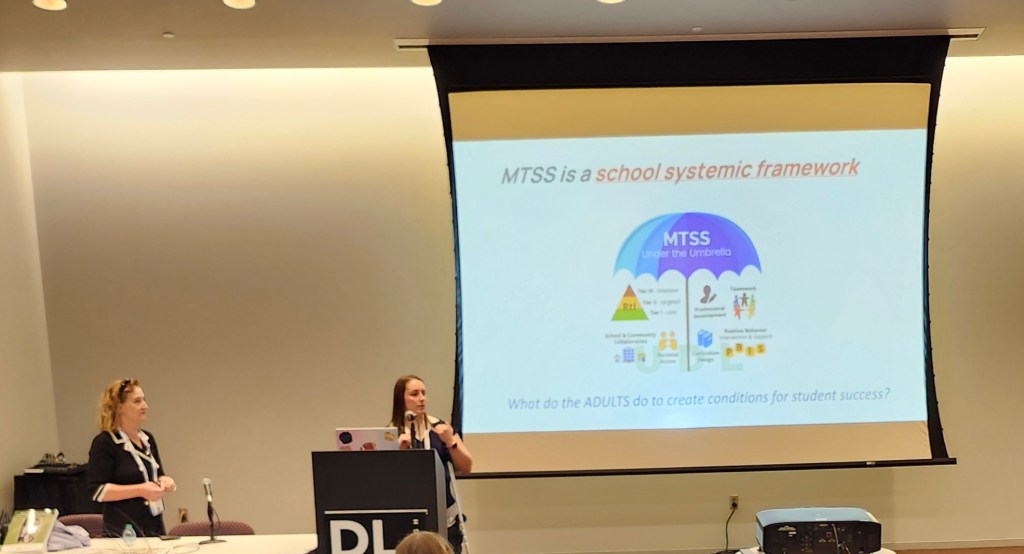
MTSS stands for “Multi-Tiered Systems of Support.” It is a framework of proactive tiers of support to meet students’ needs wherever they may lie. Tier I encompasses high-quality core curriculum and instruction for all (universal). Tier II provides supplemental interventions for those who need it (targeted). Tier III serves students who have the greatest academic or behavioral needs (intensive intervention). MTSS is for all students; every educational, social-emotional, and behavioral need can be served through the MTSS model. When MTSS is implemented with fidelity, the effect size of its use with students is 1.09, meaning that students served with the proper interventions within the MTSS model will see MORE than one year’s growth for one year’s worth of time! (Almarode, J., Hattie, J., Fisher, D., & Frey, N. (2021). Rebounding and reinvesting. Where the evidence points for accelerating learning. A GOLD paper. Thousand Oaks, CA: Corwin.)

Understanding Twice-Exceptional Learners: Ability + Disability

Hughes grounded us in a simple definition of twice-exceptional (2e): twice-exceptional learners show evidence of both ability and disability. Because of the well-known masking effect, one can easily hide the other. These students have very real learning challenges, and they also bring tremendous assets to their schools. Our systems must recognize both.

Shifting to a Strengths-First Lens

A central theme of the session was the power of strengths-based thinking. Instead of focusing on what students cannot do (a deficit mindset), strengths-based approaches intentionally look for talents, capabilities, and positive attributes. This shift is not fluffy. It has a real impact on student motivation, confidence, and engagement.

The presenters pushed us to examine our own language. Are we unintentionally sending messages that limit students’ potential? They challenged us to replace phrases like “students with deficits” with:

  • Students with emerging needs
  • Students with advanced learning needs
  • Supports for meeting grade level standards and beyond
  • Individualized learning pathways

Every part of our system communicates our values, including manuals, agendas, and templates, so we should check all of it for deficit language.

Introducing the 5F Framework for IEPs

Hughes and Smith offered a refreshingly organized way to think about the IEP process: the 5F Model, a cycle grounded in intentionality and student-centered planning.

Framing – Building a shared understanding of the student’s unique profile
Finding Strengths – Identifying talents, interests, and capabilities
Formalizing Supports – Situating supports within the MTSS structure
Forging Goals – Creating goals that both reduce barriers and build strengths
Fulfilling Plans – Implementing plans with the right level of resources and monitoring

They argued that most IEP teams spend too much time on wordsmithing and not enough time on problem-solving. Their “IEP wish list” was refreshingly realistic:

  • Goals come directly from student data
  • Strengths drive everything
  • The team’s time is spent thinking, not formatting
  • AI handles the heavy lifting

MTSS: A System Built for Flexibility

One of the most important takeaways: MTSS is a framework, not a label, and when MTSS is done properly, it can serve every student exactly how he or she needs it. Hughes and Smith reminded us that supports are tiered, but students are not.

MTSS should respond to the student, not their eligibility category. A label is not required for a learner to receive help. In fact, Hughes spent time in the United Kingdom, and she said that she learned that in the U.K., students do not need a label at all before services begin.

The presenters also advocated for a more unified MTSS graphic, such as a single stacked pyramid instead of the classic MTSS diamond. Gifted education, special education, and general education belong within the same flexible, responsive framework. Many school divisions do not see the power of serving gifted needs through the MTSS model. I often tell my teachers and principals that gifted education and talent development is part of the continuum of services for all students, and should be firmly addressed through MTSS, as well.

A strong MTSS system improves:

  • Identification of advanced and struggling learners
  • Access to enrichment and challenge
  • Responsivity through teaming, data, and progress monitoring
  • Educational equity, ensuring students receive what they need when they need it

The Role of AI: Efficiency, Not Replacement

AI came up as a practical tool for:

  • Locating resources and research for 2e IEP development
  • Drafting asset-focused IEP goals
  • Streamlining template creation
  • Improving team efficiency

With the right prompts, AI can help teachers reduce paperwork, stay student-centered, and create more consistent, strengths-based plans.

Moving Forward Together

Hughes and Smith emphasized the need for:

  • Specialized training for educators working with 2e learners
  • Professional learning aligned to MTSS and NAGC Programming Standards
  • Intentional local planning that connects district strategic goals to gifted programming

Their closing message was one I will not forget: “Every 2e student deserves an educational plan that celebrates their strengths.”

This reminder, one I plan to bring back to my division, may be the most important: “We need to stop asking whether the student is responding to the system and start asking whether the system is responding to the student,” (from the Nebraska MTSS website).

What a powerful charge for all of us working in gifted education, special education, and MTSS! This was an exceptional session from start to finish!

What are your thoughts about the ideas I reviewed in this blog post? How does your division address 2e learners? Leave your thoughts and ideas in the comments below. Let’s have a conversation! ~Ann

Teacher Rating Scales: Promises and Pitfalls — A Review from #NAGC25

Photo by cottonbro studio on Pexels.com

One of the most eye-opening sessions I attended at NAGC25 was Teacher Rating Scales: Promises and Pitfalls presented by Dr. D. Betsy McCoach (Fordham University) and Dr. Karen Rambo-Hernandez (Texas A&M University). Their research, funded through multiple U.S. Department of Education Javits Grants, dives into a tool many of us rely on in gifted identification: teacher rating scales (TRS). And what they revealed was extremely important for gifted coordinators to know.

Big Questions

The presenters opened by discussing tools like the Hope Scale, which includes both academic and social-emotional indicators. They challenged us to think more deeply: If a student demonstrates a particular indicator, what program or service does the indicator actually suggest? What curriculum would meet that student’s needs? In other words, the scale should connect to something concrete—not sit in isolation.

The Teacher Effect: A Huge Source of Variance

One of the most striking findings of their research was the extent to which teachers themselves impact students’ scores.

We all know teachers vary in generosity- some rate more students highly, while others are more conservative. However, the data brought this to life in a sobering way.

In a West Virginia Javits study led by Dr. Rambo-Hernandez, teachers received either live half-day training or asynchronous modules on how to use rating scales. And yet, even with training of differing levels and types, large disparities remained. Teachers simply used the tool differently.

Dr. McCoach described this as Conditional Between-Teacher (Within-School) Variance: even after controlling for student ability and achievement (using the Cognitive Abilities Test- CogAT, the Measures of Academic Progress- MAP, and TRS data), differences between teachers persisted. In fact:

  • Ability and achievement barely predicted how students scored on teacher rating scales.
  • Teachers themselves accounted for one-third to one-half of the variance in rating scale results.

In plain terms? A student’s score reflected the teacher more than the student.
As someone who has served as both a teacher and a coordinator, I felt that deeply.

How Many Gifted Students Are We Missing?

The most startling finding came from their comparison of cognitive scores with TRS results:

Among students scoring in the top 10% on the CogAT in their district, only 32.4% of them also scored in the top 10% on the TRS.

Let that sink in… we’re missing almost 70% of high-ability students when TRS are used as a gatekeeper.

Even when widening the TRS criteria:

  • Top 10% CogAT + top 20% TRS → only a 56.2% overlap
  • Top 10% CogAT + top 25% TRS → only a 63.6% overlap
  • Top 10% CogAT + top 30% TRS → only a 70.3% overlap

Even in the most generous scenario, we are still missing 30% of students. For anyone committed to equity in gifted education, this is unacceptable.

So What Do We Do Instead?

Thankfully, the session didn’t stop at the problem. Drs. McCoach and Rambo-Hernandez pointed us toward thoughtful, practical solutions.

1. Include Teacher Voice- Just Not as a Gatekeeper

Dr. Joe Renzulli’s “classic” suggestion still holds: Gather your talent pool using multiple measures (ability, achievement, talent-development products, etc.), then ask teachers: “Who is missing?” This reframes teachers as informants, not filters.

2. Provide Annual Rater Training

If you must use TRS:

  • Train teachers every year—even a 10-minute refresher matters.
  • Clarify what each number means (“What is a 1? What is a 2?”).
  • Build a shared frame of reference to improve inter-rater reliability.

This isn’t about perfection. It’s about tuning the instrument.

3. Advocate for Better Policy

If you have influence: push to use TRS as one of multiple data points, like in Virginia (no one score can get a student into a gifted program nor keep a student out of a gifted program). If using TRS, make sure to:

  • Train annually (see discussion above)
  • Review results for bias
  • Ensure no student is denied access to services because of a rating scale alone

The presenters were crystal clear about this point: Do NOT use teacher rating scales as universal screeners. They simply aren’t reliable enough, and we could miss too many students.

Final Thoughts

As a gifted coordinator, I walked away from this session with both urgency and clarity. Teacher rating scales can still play a role in our identification systems, but only when used carefully, responsibly, and alongside multiple measures.

If we truly believe in talent development for all students, then we must question the tools that inadvertently hold so many of them back. This session was a firm reminder that identification is not neutral, and that educators have a responsibility to keep refining our systems for fairness, access, and accuracy.

If you attended this session at #NAGC25 too, I’d love to hear your takeaways in the comments below. Even if you didn’t, but you’re working on improving your division’s identification practices, let’s connect! I love helping schools rethink systems to better spot potential. The more educators can work together to solve identification issues, the better off students will be! ~Ann

“Being the Educator They Need:” Reflections from Dwayne Reed’s NAGC25 Keynote

So, the wait was finally over and NAGC25 was here! My colleague and I arrived in time to settle into the Ballroom of the David L. Lawrence Convention Center in Pittsburgh, PA, for the #NAGC25 opening keynote address (see us below!). The keynote was inspiring and provided a perfect message for all of us to kick off the conference!

My colleague and me arriving to the convention center to check-in! #NAGC25

I found myself laughing, nodding, and occasionally tearing up during Dwayne Reed’s keynote, “Being the Educator They Need.” If you’ve ever heard Teach Mr. Reed speak, you probably already know that he brings heart, humor, and a fierce belief in kids to every room he enters. This was my first time hearing him speak, and it was the first time I ever heard his viral song, “Welcome to the 4th Grade” (it was GREAT, by the way). His talk wasn’t about strategies, frameworks, or academic outcomes. It was about us- the humans in front of gifted children every day- and how who we are shapes what they can become.

As gifted educators, homeschool parents, and coordinators, we spend so much time designing high-level tasks, identifying potential, and nurturing talent. But Mr. Reed reminded us of a truth we sometimes forget: before we can challenge our students’ minds, we must connect with their hearts.

Or as he put it: “We must Maslow before they can Bloom.”

Mr. Reed gave the gifted educators in the room three very important tips to help us keep relationships first:

Tip #1: Who Am I? The First Question Every Educator Must Answer

Reed began with a simple but profound challenge: Kids can only make sense of who we are based on what we reveal about ourselves.

And wow, did that resonate.

When I was a child, I was endlessly curious about my teachers. Did they have kids? Where did they go to college? Did they like softball as much as I did? Back then, teachers rarely shared anything personal. So when I became a teacher, I made a decision: my students would know me as a person: my hobbies, my family, my quirks, my love of learning… I let them all in on my life!

And it changed everything.

Year after year, my strongest classroom moments came not just from unit plans or carefully crafted lessons, but from relationships- genuine, mutual relationships. Reed summarized this beautifully through Rita Pierson’s famous line:

“Kids won’t learn from people they don’t like.”

When students know us, they trust us, and trust is the foundation of challenge, risk-taking, creativity, and rigor, especially for gifted learners who can sometimes feel misunderstood or feel afraid to take a chance. I, myself, often tell teachers and principals that strong relationships are the foundation of achievement for kids.

Tip #2: Who Are They? Understanding Their Stories

After we understand ourselves, we must turn toward the children in front of us. Mr. Reed challenged us to ask: “Who are they?”

What are their passions? Their triggers? Their excitements? Their fears? Their stories?

Each gifted student carries a unique set of strengths and complexities. He spoke candidly about what some of our students face at home:

  • Abandonment
  • Abuse
  • Drug exposure
  • The foster system
  • Violence and gang pressures
  • Food insecurity
  • Depression
  • Suicidal ideation

The room was silent, and I instantly reflected about former students of mine who dealt with many of the situations Mr. Reed listed.

And then he said something I hope every educator remembers:

“We should not be meeting trauma with trauma; we need to meet trauma with compassion.”

We can’t always fix their circumstances. But we can meet them where they are. We can listen. We can follow up. We can show up consistently.

Tip #3: Who Are We? Building the Collective “We” in a Classroom

The final question Mr. Reed posed might be my favorite: “Who are we together?”

A classroom is not simply a group of individuals. It is a family in progress, a community we intentionally create. Mr. Reed reminded us that the difference between a good teacher and a great teacher isn’t charisma or cleverness. It’s intentionality!

We don’t build belonging by accident. We build it by choosing it. He gave us some ideas for being intentional, some of which were:

  • Greet students every day at the door- with their name, a smile, a handshake, or a fist bump,
  • Play games with your class (the goofy ones usually work best), and
  • Apologize when you mess up (model humanity).

Mr. Reed also reminded us that relationships don’t stop at the classroom door. Showing up for kids at sports events, recitals, birthdays, and community spaces builds trust in powerful ways- especially for gifted students who thrive on connection and recognition.

The Lasting Impact

As Mr. Reed closed, he reminded us that the lessons we teach stretch far beyond our walls. Our presence, our intentionality, and our belief in our students become memories they carry into adulthood. This concept really hit home for me since just this past summer, a former student of mine from almost 15 years ago reached out to me through my website. His email flooded me with emotion, and it validated my instinct so long ago to be real with my students:

“I just wanted to say hi and thank you. You were such a pivotal role model in my life while so much was hectic in my own home and you always believed in me and encouraged me to reach my full potential. Thank you for always being the authentic you and I’m so happy to see you excelling in life!”

Gifted kids, in particular, feel deeply. They remember who championed them, who saw them, who cared enough to understand their quirks, passions, sensitivities, and potential. And they remember who was there for them even if they don’t tell you how much they need you.

And that’s why this keynote by Dwayne Reed resonated with me so much.

Because being “the educator they need” isn’t about perfection. It’s about presence.
It’s about seeing and being seen. It’s about choosing connection every single day.

Don’t ever forget the power of a strong relationship with your gifted students.

What stories do you have about the deep connections you might have made with a student? Share them in the comments below. I’d love to read them! ~Ann

Holiday 2025 Shopping Guide for Gifted and Advanced Children and Teens- Creative Activity-Based Gifts

Photo by olia danilevich on Pexels.com

One of the best ways to nurture your gifted or advanced child’s talents is by giving them gifts that open up possibilities rather than close them down. Open-ended, creative toys and materials allow kids and teens to explore, design, invent, and express themselves—without a single “right” answer. Whether your child is musical, artistic, logical, or imaginative, these gifts inspire self-directed learning and talent development across multiple domains. Here are five engaging activity-based gift ideas that are perfect for gifted and advanced learners of all ages.

Musical Instruments (ages 3+ and up)

Research continues to show that learning to play a musical instrument strengthens the brain, improves memory, and enhances creativity. Musical training activates both hemispheres of the brain and supports complex thinking skills—skills often found in gifted learners.

  • USC StudyChildren’s brains develop faster with music training (2016)
  • Kidsville Pediatric Blog PostThe impact of music on your child’s brain development (2024)
  • EdSourceHow music education sharpens the brain, tunes us up for life (2024)

For young children, simple instruments such as shakers, xylophones, or ukuleles encourage rhythm and pattern recognition. For older kids and teens, a keyboard or guitar can become an expressive outlet for creativity and emotion. With free YouTube tutorials and beginner apps, your child can explore music before you invest in lessons or higher-quality instruments. The goal isn’t perfection—it’s exploration, expression, and the joy of making music.

H5 Domino Creations (ages 5+)

Do you remember creating long chains of dominoes just to watch them tumble? H5 Domino Creations takes that idea to the next level, allowing kids, teens, and families to design intricate domino runs filled with loops, bridges, and patterns.

This toy is fantastic for gifted learners who love engineering, cause-and-effect reasoning, and creative problem-solving. Much like Rube Goldberg machines, building domino runs requires patience, spatial reasoning, and precision—all valuable skills in STEM fields. Gifted kids who thrive on seeing their ideas come to life will be thrilled by the visual and auditory payoff of watching their designs in motion.

Sphero Mini Coding Ball (ages 8+)

The Sphero Mini Coding Ball is a small, powerful toy that introduces children and teens to the world of coding and robotics. Through the app, kids can code their Sphero to roll, light up, and navigate obstacle courses they design themselves.

This toy is a perfect blend of logic, creativity, and experimentation—core traits of many gifted learners. It encourages persistence, strategic thinking, and iterative design as kids test and adjust their code. Whether your child dreams of inventing video games or designing technology that changes the world, the Sphero Mini is an engaging first step into computational thinking.

Art Kits for Every Age

Crayola Create & Carry Travel Art Set for Kids (ages 5+) and PRINA Art Sketch Kit (older children, teens, and adults) provide endless opportunities for self-expression. Many gifted children and teens have exceptional visual-spatial abilities and find comfort and joy in artistic creation.

These kits include a wide range of materials—markers, colored pencils, paints, and sketchbooks—so your child can experiment and develop a personal artistic style. My middle son especially loved pencil drawing, and we kept a portfolio of his evolving work through the years. For gifted learners, art is more than recreation—it’s reflection, problem-solving, and storytelling all in one.

Writing

Blank Books (estimated ages 5-9) and Hardcover Blank Books (estimated ages 10-14)

Few things delight young authors more than a blank book waiting to be filled. For gifted students who love to write, illustrate, or create their own universes, blank books invite imaginative worlds to take shape.

Younger children (ages 5–9) might enjoy the softcover versions with spaces for drawings and simple stories, while older kids and teens (ages 10–14) can use hardcover versions for novels, comic books, poetry collections, or even research journals. In my classroom, my gifted students treasured these books as creative outlets, and I’ve saved several that my own children made at home. Each one tells a story of curiosity, originality, and persistence.

Wrapping It Up

I hope these open-ended, creative gift ideas inspire your child to explore their interests and express their talents this holiday season. Musical instruments, coding kits, art sets, domino creations, and blank books all have one thing in common—they empower kids and teens to take ownership of their learning and follow their curiosity.

If you’ve enjoyed this post, be sure to check out the full Holiday 2025 Shopping Guide for Gifted and Advanced Children and Teens (covered in my last 3 blog posts), where I share even more recommendations for curious minds and creative thinkers.

What open-ended gifts have inspired your gifted child? I’d love to hear your ideas in the comments below.

Wishing you a joyful and wonder-filled holiday season!
~ Ann

Holiday 2025 Shopping Guide for Gifted & Advanced Children and Teens — Toy Ideas

Photo by MART PRODUCTION on Pexels.com

Welcome to Part Three of my holiday gift-giving guide! In this installment, I focus on toys that challenge and engage gifted and advanced children and teens. When chosen thoughtfully, toys do far more than occupy time—they open doors to imagination, creative problem-solving, and intellectual growth. In my work as a gifted education coordinator and classroom teacher, as well as my experience as a parent of three boys, I’ve seen how the right toy can spark curiosity, extend inquiry, and support advanced learners in meaningful play.

Why open-ended toys matter

Before diving into suggestions, let’s talk about what I look for when selecting toys for gifted learners: open-endedness, flexibility, and opportunities for deeper thinking.

  • Research shows that toys which don’t dictate how they must be used allow children to make choices, explore, create their own scenarios, and build cognitive, social, and language abilities. Ag and Natural Resources College+2Allison Fors, Inc.+2
  • Open-ended toys allow the child to be 90% of the play, with the toy providing just the launching board—not the full story. RAD Children’s Furniture+1
  • For gifted learners in particular, toys that permit multiple entry points, growing complexity over time, and self-directed challenge are key.

With that in mind, here are some curated suggestions—many of which have been favorites in my sons’ play and in my 18 years of teaching gifted learners. (Please note: Some of the links below are Amazon affiliate links. As an Amazon Associate, I earn from qualifying purchases.)

Mega Bloks (ages 1–5) and LEGO® (ages 6+)

Both of these toys are classic examples of open-ended construction play, and I especially recommend the loose-building block versions. With these, kids and teens can design and build freely—no predetermined plans or directions required.

That said, I’m not opposed to kits! My middle son’s old room is still full of his LEGO Star Wars model ships—and he’s 27 now! He spent countless hours building those kits and modifying the ships with his own enhancements. Whether your child builds from imagination or modifies a kit, this kind of open-ended play develops engineering skills, perseverance, and creativity.

Side note: LEGO® and building blocks are unisex toys. Often, people think they are primarily for boys, but every child benefits from the problem-solving and spatial reasoning that come with building. I’ve made it a tradition to buy a set of Mega Bloks for each of my young cousins around ages 2–3, just to encourage both girls and boys to explore building early on.

Marble Run (ages 8+)

Marble Run sets are another fantastic hands-on toy for budding engineers and problem solvers. Kids build tall, twisting towers, then experiment to get the marble to travel from start to finish. The trial-and-error element reminds me of Rube Goldberg machines—complex contraptions designed to complete a simple task in the most creative way possible!

Gifted learners often love the challenge of predicting outcomes, testing hypotheses, and improving designs, which makes a Marble Run a wonderful introduction to physics and cause-and-effect thinking. These sets can easily provide hours of engaging play and exploration.

Snap Circuits Beginner (ages 5+) and Snap Circuits Explorer (ages 8+)

I didn’t have these kits when my boys were little, but several of my students’ parents raved about circuitry toys. Snap Circuits kits are a hands-on way for children to explore electricity, circuitry, and invention safely and independently.

They allow kids to build working devices—like lights, fans, and alarms—while learning the “why” behind how circuits function. These highly-rated kits are ideal for curious tinkerers and budding electrical engineers who enjoy cause-and-effect exploration and creative problem-solving.

Rubik’s Cube (ages 8+)

This timeless puzzle never goes out of style! My boys collectively spent hours twisting and turning their cubes, determined to solve them—and along the way, they sharpened their logic, spatial reasoning, and perseverance.

The Rubik’s Cube is more than just a toy—it’s a brain workout. In fact, some schools have even launched initiatives to put a cube in every student’s hands each day to promote focus, critical thinking, and persistence. What a fun and affordable way to keep minds active!

Hand-Held Microscope (ages 4–12)

When I was a child, I loved using a magnifying glass to explore tiny wonders in the yard—blades of grass, ant hills, leaves, and pebbles. Today’s handheld microscopes take that curiosity to a whole new level!

This modern, portable microscope allows kids to zoom in on the microscopic world, capture photos or videos, and even save them to an SD card. These tools combine technology and discovery, encouraging observation, documentation, and scientific thinking. Gifted children will especially enjoy connecting what they see to real-world science concepts, fostering inquiry-based learning at home or outdoors.

Closing Thoughts

Whether you choose building sets, puzzles, or science tools, the key is to look for open-ended toys that grow with your child’s imagination. Gifted and advanced learners crave challenge, flexibility, and opportunities to create, and these classic toys provide all three.

Stay tuned for Part Four of my Holiday Gift Guide, where I’ll share gifts that help kids create!

Holiday 2025 Shopping Guide for Gifted and Advanced Children and Teens: Game Ideas

Photo by Kampus Production on Pexels.com

Playing board games as a family is such a great way to build strong bonds with your children! Almost any game you play together will be fun, but some games are perfect for stoking the thinking skills of gifted and advanced learners, too. Here are a few game gift ideas that were my family’s favorites, faves of my gifted students over the years, or new games I discovered in my research. I hope you love these ideas! (Please note: This article contains a few links to Amazon. As an Amazon Associate, I earn from qualifying purchases.)

Game Ideas

Zingo — Zingo is like a mini-Bingo game but uses pictures and words. It helps children with pre-reading and reading skills and can have up to 6 players (ages 4+). There are actually two other versions of this game: Zingo Word Builder and Zingo 1-2-3 Number Bingo, both also for ages 4+.

Why this is a great game for gifted children: Because gifted children often pick up early reading and pattern recognition quickly, Zingo’s fast pace and matching of pictures + words give them a chance to accelerate the fluency of recognizing word‐image links. The “two levels of play” help them self‐differentiate: one side is easier; one side is more challenging. Also, the quick tile‐dispensing and competition to call out a match gives them a mental speed‐boost, which many gifted children enjoy when they’re ready for more challenge.

Blokus — this strategy game is easy to learn and designed for families. My gifted students used to love to play this game during indoor recess (ages 7+).

Why this is a great game for gifted children: Blokus gives children a rich spatial/visual reasoning workout: they must mentally rotate, flip, and plan placement of pieces while also considering how opponents might block them. Researchers note that strong spatial reasoning predicts STEM success. (Games for Young Minds)

Moreover, it’s quick to learn (“less than a minute of rules”) but hard to master – exactly what many gifted kids prefer: depth without drag. (familygamesquad.com)

The fact that it requires both strategy (what will I place) and defense (how can I block you) makes it ideal for children who need high‐ability challenge and like to think ahead.

No Stress Chess — Chess is an excellent game for two players and definitely helps players to develop strategy. I taught all of my boys to play chess when they were in first grade, so it’s definitely possible for young children to learn chess. I came across this great ‘teaching’ version of chess to help children more easily learn the game (ages 7+).


Why this is a great game for gifted children: Chess is often called the “ultimate strategy game” — playing it helps children develop logic, visualization, planning, and self‐regulation. (RIGHT BRAIN CHILD)

No Stress Chess in particular scaffolds the rules via cards so children don’t get frustrated trying to remember how pieces move; instead they can focus on the strategic part. (My Little Poppies)

For gifted students, who often crave a deeper challenge, this version offers the doorway into full Chess without the steep learning curve, enabling them to engage sooner and confidently.

Scrabble– If you love words, and your children love competing with big words, then classic Scrabble is for your family (ages 8+). Don’t forget The Official Scrabble Dictionary if you plan to enact the “challenge” rules to your game as well as Scrabble Score Sheets to better organize your scorekeeping.

Why this is great for gifted children: Scrabble isn’t just fun—it’s a serious literacy and cognitive workout. It encourages vocabulary expansion, spelling proficiency, and strategic placement of words to maximize points (e.g., through double/triple letter and word scores). (Sanako)

Gifted children, who often have strong verbal aptitude and enjoy word‐play, can really dive into the strategic side (tile tracking, board geometry, probability of remaining letters). (Mensa for Kids)

Plus, playing with others allows them to articulate word choices, justify strategy, and build metacognitive awareness about how they think—important for upper‐elementary/high‐ability learners.

Apples to Apples– The point of this game is to make comparisons among different cards and convince the rest of the players to vote for your comparison as the best one. I have fond memories of playing games such as APPLES TO APPLES with our boys, and my husband winning the game based on his ability to persuade the boys that a “Witch” was slipperier than my card- a “Worm!”  I’ve never laughed so hard while playing a game as I did when playing this one (ages 12+). There is also a version for younger kids, too- Apples to Apples Junior (ages 9+).  

Why this is a great game for gifted children: This game taps into higher‐order thinking: making connections between seemingly disparate ideas, persuading others, reasoning about which pairing the judge will prefer—and even thinking about meta‐perspective (What is the judge’s mindset?). (giftedissues.davidsongifted.org)

For gifted children, who often enjoy complex ideas and are capable of seeing multiple viewpoints, Apples to Apples provides a fun social context for that thinking. It also builds verbal reasoning, vocabulary (since cards include diverse nouns/adjectives), and the joy of clever argumentation.

Final thoughts for choosing games for gifted learners:

  • Choose games that provide depth, flexibility, and the opportunity for advanced thinking (strategy, spatial reasoning, meta‐cognition).
  • Make sure they are playable by your child’s current skill but have “stretch” for where they can grow.
  • Use family game time not only for fun, but as rich interaction: ask your gifted child to explain their thinking (“Why did you choose that word? Why did you place your piece there?”).
  • For each game you bring into your home/classroom, consider extension prompts for gifted students: e.g., “Design a new rule that increases the challenge,” “What if we flipped the goal?” “How can you use this game to teach someone younger?”
  • Rotate games frequently so gifted learners don’t lose interest and continue to be challenged.
  • Use the game time not only for fun but for verbal debrief: ask them to reflect on strategy (“What worked? What surprised you?”) and metacognitive thinking (“How did you decide? What would you try differently?”).
  • Encourage siblings or mixed-age play: gifted children can mentor younger siblings, which strengthens their own thinking as they explain and scaffold.

I hope my game picks spark a playful and enriching game night with your children during this holiday season. Are you familiar with any of the games on this list? If so, how do your children like the games? Please list your other game suggestions in the comments below! ~Ann

Holiday 2025 Shopping Guide for Gifted and Advanced Children and Teens: Book Ideas

Photo by Stanislav Kondratiev on Pexels.com

It’s that time of year when many families start thinking about holiday gifts—whether for Christmas, Hanukkah, or Kwanzaa. What can you give your gifted or advanced child that’s both meaningful and mentally engaging?

Have no fear—I’ve done the research for you! I’ve curated several lists of gift ideas that provide both cognitive stimulation and fun for gifted and advanced learners, ages 4 and up. Each day this week, I’ll share a different post highlighting books, games, toys, and creative activities to help you plan your holiday shopping. The first list up: BOOKS! (Please note: Some of the links below are Amazon affiliate links. As an Amazon Associate, I earn from qualifying purchases.)

Books: Classic and Engaging Choices for Gifted Minds

Reading is one of the most powerful ways to nurture a gifted child’s mind and imagination. Books expand vocabulary, deepen empathy, and open up worlds of ideas. While children should experience all kinds of genres, I find that classics are often overlooked—even though they’ve stood the test of time for a reason.

Classic stories offer rich language, timeless themes, and a window into different eras. They also prepare children for more complex literature later on. Here are a few excellent options to consider:

Aesop’s Fables- Classic Edition (ages 4–8)

This beautifully illustrated collection (illustrated by famous artist Charles Santore) includes well-loved fables such as The Hare and the Tortoise, The Lion and the Mouse, The Town Mouse and the Country Mouse, and The Wolf in Sheep’s Clothing.

Fables are perfect for helping children think critically—especially as they interpret and explain the moral of each story.

Best of Children’s Classics (ages 6–10)

This five-book boxed set includes Peter Pan, The Secret Garden, The Wizard of Oz, The Little Prince, and The Little Princess.

These timeless tales transport readers to magical worlds while helping them reflect on universal themes like friendship, courage, and imagination. They also introduce young readers to foundational works of classic literature.

A Wrinkle in Time Quintet Boxed Set by Madeleine L’Engle (ages 9+)

Can a 30-year-old story be considered a classic? Absolutely—and this one’s a must-read for gifted readers!

I first discovered A Wrinkle in Time in high school, and I couldn’t put it down. Later, as a teacher, I used it as a novel study for several years with my 5th grade gifted students—who were equally captivated. I recommend giving the entire boxed set, so readers can seamlessly move through the series once they’re hooked!

The Call of the Wild by Jack London (ages 10+)

This survival story of a sled dog during the Klondike Gold Rush is both powerful and moving. It challenges readers to consider resilience, conflict, and adaptation—all key themes for advanced thinkers.

Bonus Book Picks from My Family (Modern Classics)

When my three sons were growing up, these titles were huge favorites in our house:

Each one inspired lively conversations about courage, creativity, and problem-solving—perfect for curious, deep-thinking kids.

Reading Bonus Idea: Book + Movie Gift Baskets/Gift Series

One of my favorite traditions—both at home and in the classroom—was reading a book together and then watching the movie version. This creates a perfect opportunity to compare and contrast, spark discussion, and build comprehension skills.

After first reading the book together and then watching the movie, ask questions like:

  • What was different between the book and movie?
  • Which version did you prefer—and why?
  • What would you have changed in the movie if you were the director?

You could even turn this into a themed book-and-movie gift basket, spread it out as a “12 Days of Reading” gift series, or give as a series of small Hannukah or Kwanzaa gifts.

Example basket idea:

Still Looking for Ideas?

If none of the books above quite fit your child’s interests, explore these excellent book lists for more inspiration:

New York Public Library’s 125 Kids Books We Love

National Public Radio’s (NPR) 100 Favorite Books for Young Readers

American Library Association’s Notable Children’s Books 2025

Happy shopping—and happy reading!

Oh, and I’d love to hear from you: Which of these books might your gifted child enjoy most? Or what titles would you add to this list? Share your thoughts in the comments below! ~Ann

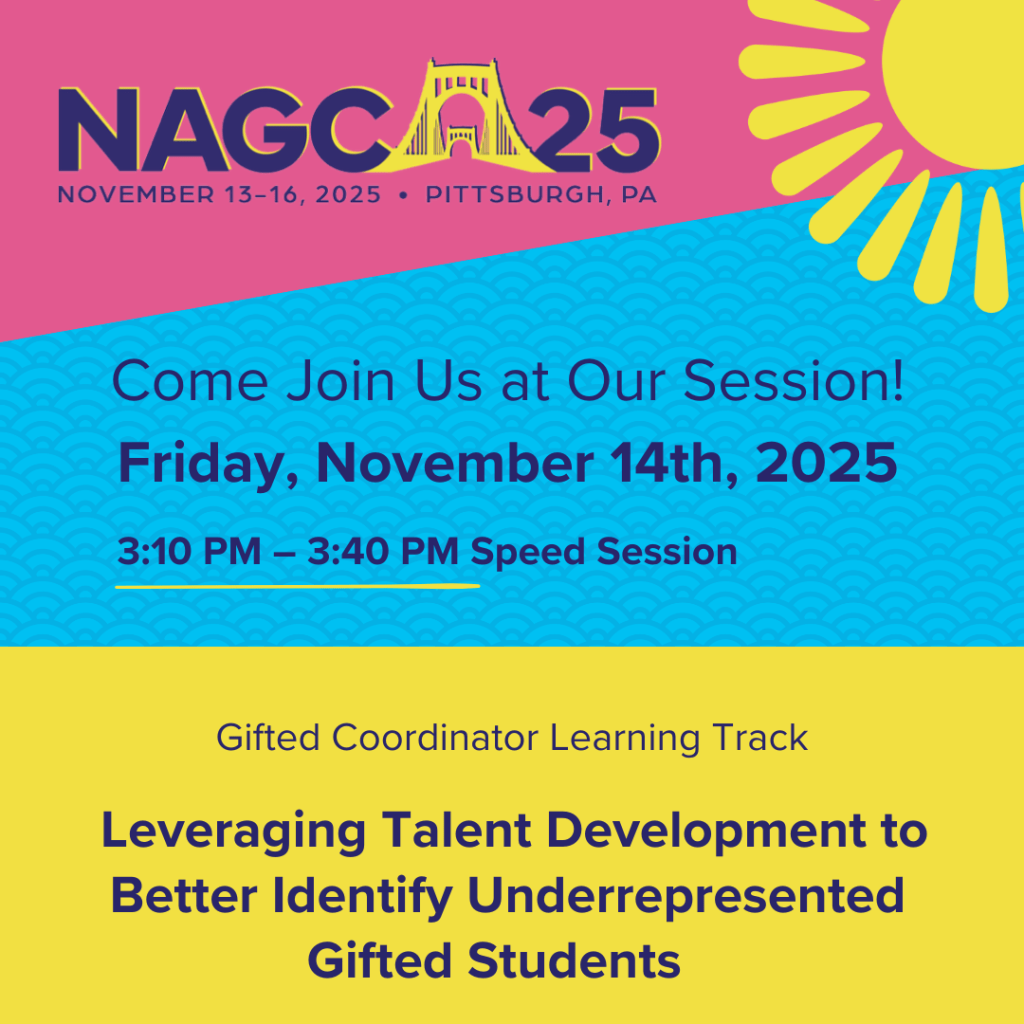
I’m Presenting at NAGC25: Leveraging Talent Development to Better Identify Underserved Gifted Students in K-2

Guess what’s coming up next week? If you’re a gifted educator, you already know it’s one of the most exciting times of the year in gifted world — the National Association for Gifted Children’s Annual Convention (#NAGC25)!

I’m thrilled to share that I’ll be presenting a speed session at NAGC25 alongside two talented colleagues — Dr. Kimberly Beckerdite (Newport News Public Schools) and Ms. Esther Gencheva (Baltimore City Public Schools)!

Our session focuses on a challenge that continues to resonate across the field: the underrepresentation of gifted students from diverse populations in gifted programs. Together, we’ll share how our three school divisions — each with unique demographics — have implemented talent development strategies in primary classrooms to increase access and equity in gifted identification.

Here’s the official program description for our session:

“The underrepresentation of gifted students from diverse populations has been an intractable problem in gifted education for decades. Three school divisions with differing demographics have tackled this problem through the implementation of robust talent development programs in primary grade classrooms. Learn about common and uncommon strategies the divisions have used and the results of their work thus far.”

If you’ll be at #NAGC25, I hope you’ll join us! Let’s connect, exchange ideas, and continue working together to identify and nurture potential in all gifted learners — especially those from underrepresented student groups.