Yesterday, in my article “My Favorite Things: Fun Summertime Challenges for Gifted Kids,” I mentioned that I would share six new summer activity ideas to keep your gifted and high-ability kids thinking all summer. Today is Day 1 of my new ideas! Here goes…
Have you ever gone on a scavenger hunt? Whether it’s Pokémon Go or something more professional (not affiliated), using clues to search for a hidden treasure is exciting AND challenging to your brain!
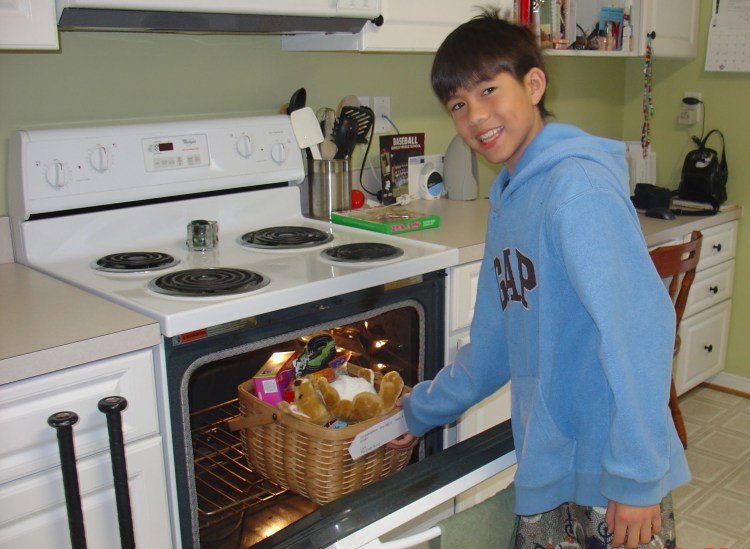
When I was a kid, every Easter the Easter Bunny hid my brother’s and my Easter baskets somewhere in the house, and we had to solve a series of clues in order to find them. It was so much fun, and one of my fondest childhood memories. In fact, the Easter Bunny actually hid Easter Baskets by scavenger hunt for my three boys when they were young, as well!
You don’t need to wait until Easter to organize a scavenger hunt for your children- you can do a summer hunt! These types of hunts allow your children to be detectives and use their problem-solving skills in a unique way. To up the challenge level of the hunt, you could create themed hunts where the treasure and the clues are all related to a certain theme (ex. Baseball, Disney, a tropical island, etc.). The possibilities are endless! Once they try a few hunts that you made, you can then have them create scavenger hunts for you and their siblings or friends! Creating their own hunts is super-creative and will be a ton of fun! By the way, an inside scavenger hunt makes a terrific rainy-day activity!
So, have you ever created a scavenger hunt for your children? If so, please share what you did in the comments along with any pictures. Together, we can create our own treasure chest of scavenger hunt ideas. Happy hunting!
Hello, and Happy Summer 2025! I’m re-posting my summer 2024 article about fun ways to keep your gifted child challenged over the summer. As a bonus, in the next six days, I’ll have 6 NEW challenge ideas for you for this summer, based on many years of my teaching and parenting experience. Parents- I hope you have a wonderful, enriching summer with your children! Teachers- same to you, and I hope these ideas might inspire you to adjust them for classroom use next school year! Happy reading, and don’t forget to come back each day for a new summer idea. (Please note: This article contains a few links to Amazon. As an Amazon Associate, I earn from qualifying purchases.)
From Summer 2024…
Hello, and Happy Mid-Summer ’24! My Spring and early Summer was crazy-busy (the most exciting parts of it were our oldest son’s wedding and our youngest son’s high school graduation), but I’m super-happy to finally have a little bit of time to blog again.
Teachers, I know you were ready for a break from your jam-packed school year. Parents, I know you were equally ready to spend quality time with your children without having the demands of school schedules to impact your days. But, once we hit 4th of July, we are halfway through summer, and I’m sure 99% of parents are already hearing, “I’m bored!” from their kids, no matter how happy they are that it’s summertime.
So, what are things teachers might recommend to parents to keep their gifted or potentially gifted children THINKING for the rest of the summer? Here are a few of my favorite things that I used to share with parents back when I was a teacher of the gifted, though my ideas are appropriate for ANY child of ANY age. I also added a few newer ideas that I have, as well. (Please note: This article contains a few links to Amazon. As an Amazon Associate, I earn from qualifying purchases.)
Idea #1:
It’s not too late to join the Summer Reading Program at your local library. It goes without saying that an educator would recommend summer reading! 😊 Most public libraries offer so many free summer activities for children from birth through high school. Kids and teens can read to earn prizes, but there are also book clubs, story time, maker spaces, Lego clubs, guest speakers, crafts, movies, etc.- all offered through your public library. Encourage your children to read non-fiction books, too. Non-fiction reading helps to build background knowledge in your children that comes in VERY handy when they are learning new things in school.
Even if your library does not offer any summer programs for children, you can make up your own Family Summer Reading Program! Whatever you do, know that reading to, and with, your child for even a little bit EVERY SINGLE DAY is one of the biggest return-on-investments that you can get for your child’s future educational outcomes (by the way, you can even read to infants!). Reading and talking about what you read together matters. Cost: FREE
Idea #2:
Do a deep dive in an area of interest. To piggyback a little bit from my non-fiction reading suggestion, figure out a topic that your child loves, and do a deep dive into it. When my middle son was at the end of 2nd grade, he became OBSESSED with the Titanic. The first thing we did was go the library and check out as many books about the Titanic as we could find (even adult non-fiction books, which had great pictures with captions). He literally couldn’t focus on much else for a few months. He read and looked at pictures about the Titanic, he watched documentaries about the Titanic (this time period was the dawn of Netflix streaming!), and he built his own Lego ship model of the Titanic. We took it even one step further one night and had Titanic Night for dinner. I made a fancy meal, we dressed up, we used fancy china dishes that we set in our dining room instead of the eat-in kitchen, and we dimmed the lights and lit candles. We pretended we were rich passengers on the Titanic, eating dinner. It was so much fun! There were a ton of other things we could have probably done along this theme, of course, but what we settled on was so much fun!
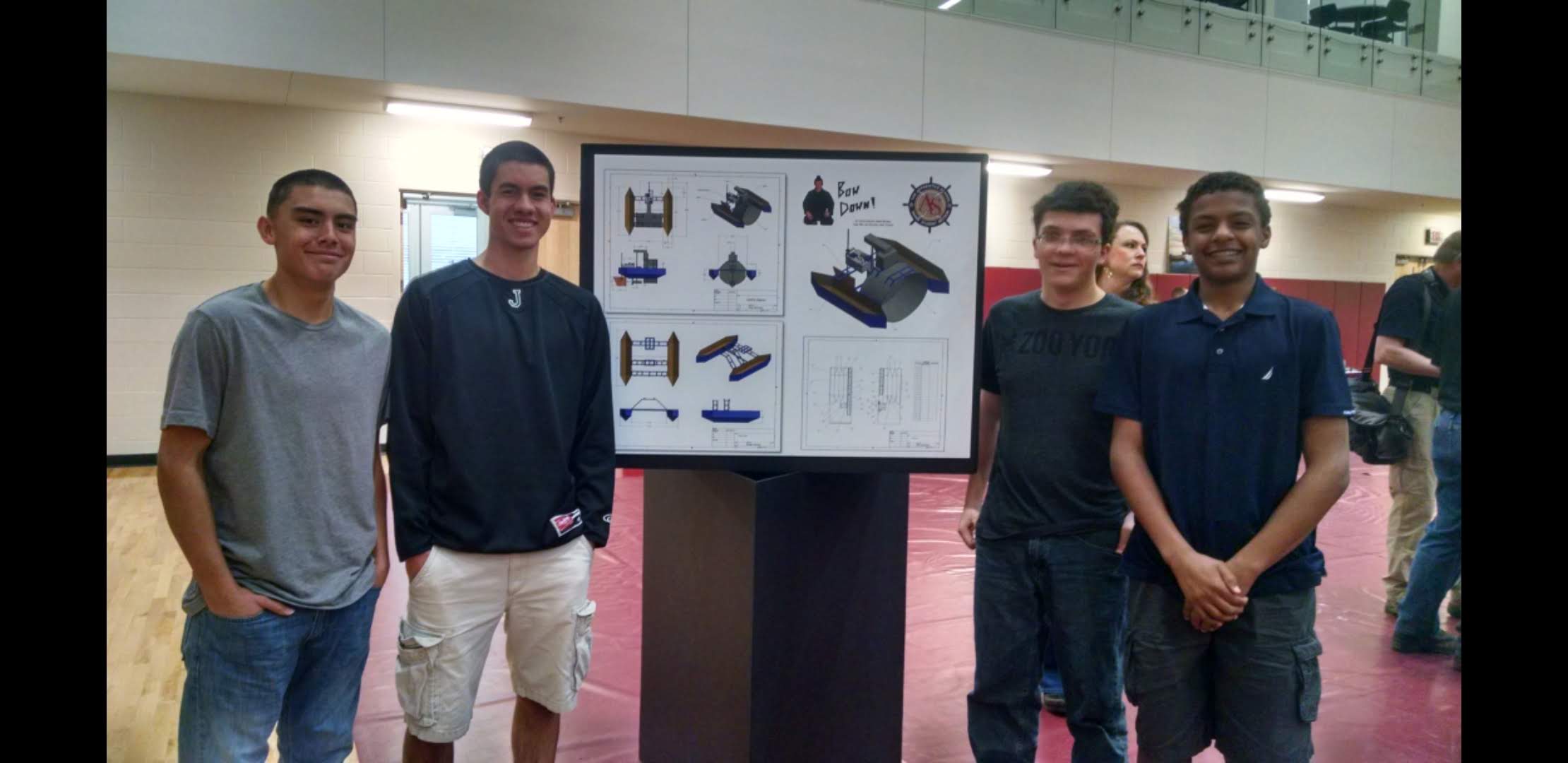
These deep “obsessions” with topics that young children have are often a manifestation of an academic strength area for children. For my son, his “study” of the Titanic at age 8 lead to a deep interest into World War II ships in the summer going into 8th grade (thank goodness for Netflix streaming again!). He spent that summer constructing models out of old aluminum siding strips from Grandpa Colorado’s garage, duct tape, and rivets using my husband’s riveter tool. Then, he would test their ability to float in his bathtub (he also dabbled in WWII plane construction, too). He had a little notebook of ideas that he kept with his designs. Once he got into high school, he took a CAD class (Computer Aided Design) and learned how to use that software to design things like boats. Through that class, he was part of a team competition on boat design for our whole region of schools. He ended up attending one of our country’s five federal service academies. Guess what his major was? Marine Engineering! Guess what he does now? He’s a Marine Engineer! It wasn’t the least bit surprising to my husband or me that this was his career choice. I’m not saying that every child’s early interests will lead to a career (I have the benefit of hindsight from which to draw the connections for my son). I AM saying that we should pay attention to (notice) and do something about (nurture) our children’s passion areas when it’s possible. Cost: FREE (other than scavenged scraps of materials and Netflix subscription costs)
Idea #3:
Play some good, old-fashioned board games– and some online games, too. Board games may seem hard to fit into family time during the school year, but summertime gives us a little more grace. Keep track of wins & losses all summer and you have yourself your own Family Tournament! Some of the board games I always recommended to parents to play with their kids were strategy games are listed below. (Please note: This section contains a few links to Amazon. As an Amazon Associate, I earn from qualifying purchases.)
Chess– The ultimate strategy game! I first taught my boys chess when they were in 1st grade.
Apples to Apples- Excellent for learning vocabulary and mastering the art of persuasion. The game comes in a junior level and an adult level, ages 12 and up.
Scrabble and Bananagrams– Vocabulary-building, spelling, and strategy game- all in one!
Set Game– Logic at its finest, and there is an online version of this game, too called “Daily SET Puzzle.”
Monopoly– Love it or hate it (it’s so LONG!), it is great for practicing money skills and gaining a foundational understanding of how real estate works.
Rush Hour- A fun spatial-relation building game that has varying levels of challenge at the junior level and ages 8+ level.
Jigsaw Puzzles- Building a regular puzzle on the dining room table also builds spatial-relation skills. There are also great online puzzles you can play each day for free through the New York Times if you make a free account (Soduku, Wordle, Mini Crosswords, Connections, and Strands).
Playing board games together as a family not only develops your child’s strategic thinking ability and skills, but it also deepens your family bond. (If you don’t already have these games, but would like to purchase them, please see my Amazon Affiliate page on Pinterest.) Cost: Free if you already own the games or borrow them
Idea #4:
Go on Family Field Trips. To me, ANY excursion out of the house can be turned into a field trip! 😊 A field trip just means going somewhere for an educational purpose, to observe or do something first-hand, in-person. You honestly could turn your weekly grocery run into a field trip if you include the right elements! Here is a brief example of how to do this:
Element #1: A purpose (to plan the best meals for our family this week using a $100 budget).
Element #2: Background knowledge (watch YouTube videos, talk to different people, read an article together, etc. to learn the best ways to plan meals and use a budget).
Element #3: Choose your destination that will serve the PURPOSE and USE the background knowledge gained (go online and find all of the grocery stores near you and maybe pick a new one to “explore” with your kids for this excursion).
Element #4: Go to the place you picked (go there, do the shopping and price comparison, buy everything, bring it home, and put it away; you could even talk to some of the managers or other grocery store workers in each department to learn about what they do).
Element #5: Process and apply the experience gained from the field trip (talk through what you all learned and make the specific plans to prepare the meals with the food you bought on your field trip).
Element #6: Share what was learned from the field trip (in this case, through the meals your children helped plan, shop for, and maybe even cook!).
Walla! You have a relatively instant field trip that you could throw together in 30 minutes. You could use those 6 elements for so many other family excursions, too!
Cost: Variable, depending on where your field trips are and if you buy anything there
Idea #5:
Create a small business. I know, you’re probably thinking that I’m crazy- my kid is only 12 years old, or 5 years old, or really, just a KID. However, think back to your own childhood. I bet that you- or someone you knew- or a cousin of someone you knew- had a lemonade stand in front their house at least once each summer. THAT is a small business! The sky is the limit now-a-days with the types of businesses kids can start and run, especially using the power of the internet. Why not spend time helping your child figure out what he or she might be able to make and sell or provide a service to sell. Dog walking? Bracelet making? Babysitting? Drawing portraits? Lawn mowing? The possibilities are endless.
While you’re at it, it wouldn’t hurt to help your child to start thinking about financial independence (FI). Quite honestly, our schools are not able to teach students everything that they need to know to access and leverage our economic system. Why not help them at home? A great place to start is with free Pre-K-Grade 12 Financial Literacy curriculum available from the ChooseFI International Foundation. There are also really good books out there that you could read together with your older child. One I particularly liked was, First to a Million: A Teenager’s Guide to Achieving Early Financial Independence, by Dan Sheeks. He also created a companion workbook for teens to use called, First to a Million Workbook: A Companion Guide for Teens to Achieve Early Financial Independence. I read the book, then I gave it to our youngest son for Christmas a few years back. The author also has a robust online community to support teenagers on their journey to FI. Cost: Variable, depending on book purchases and supplies for business start-up costs
Idea #6:
Give your child Incubation Time each day. Okay, I’m sure you are wondering what on Earth is “Incubation Time.” In the creativity research, incubation time is time to do NOTHING BUT THINK AND DAYDREAM. This is a really novel idea in the 2020’s (and even further back, if we are being honest). In our pursuit to give our children all of the experiences and things we feel are necessary to set them up for a successful life, we have inadvertently over-scheduled them (and, I’m not pointing fingers because I was quite guilty of this, too, when my three boys were younger). People, especially kids, need time to do nothing each day. When we have downtime with nothing scheduled, our brain has a chance to actually process things we’ve learned and experienced. When that happens, all of a sudden our brain is able to solve problems that we might have been stuck on or think of new ideas that we never thought of. Downtime is not a waste of time at all- it’s an opportunity for creativity to emerge!
Just to drive home my point a little deeper, I believe that we are all familiar with the concept of downtime. However, as adults, we just have been using it differently- as “veg-out” time. We spend that time scrolling social media or binging Game of Thrones (guilty again 😊). There is a time and a place for veg-out downtime, but please don’t use it to REPLACE incubation downtime, especially for our children.
If you’d like to learn more about Incubation Time and what to do with the ideas that might spring forth from it from your children, there are books available that teachers use. In schools, many teachers tap into this concept of Incubation Time through the use of Genius Hour or Passion Projects. Here a book that I have used to help teachers design Genius Hours in their classrooms, but parents could certainly use it, too: Ready-to-Use Resources for Genius Hour in the Classroom: Taking Passion Projects to the Next Level, by Andi McNair.
I think it would be fairly easy to run Genius Hour in your home during summer break. Cost: FREE, barring the costs for passion project materials that spring out of Incubation Time and if you purchase a Genius Hour book
So, there you have it. Six ideas that cost relatively little to implement and use but pay enormous dividends in family fun and keeping kids’ thinking skills and creativity skills sharp all summer long.
Do any of these ideas resonate with you? What ideas do you have for keeping your gifted child challenged and thinking during the rest of the summer? Please leave a comment for us and post your pictures of family enrichment here. I can’t wait to hear from you! Enjoy the rest of summer! ~Ann
Chances are, there are multiple documents, test booklets, and notes containing all of the data on the referred student that you have been collecting over the weeks. Most school divisions require that all of the documents be kept together in a file folder (often called a “working folder”). However, during the eligibility meeting, you don’t want to have to rifle through all of those documents to share out the information contained on each one to the Identification/Placement Committee members. It is better to compile the information in a reporting document so that all of the data is in one place. The research-based book on gifted identification, Identifying Gifted Students: A Practical Guide by Susan Johnsen (2018), recognizes two best practices to use to make determinations for gifted identification:
the Profile Method, and
the Case Study Method.
The Profile Method requires that the data for the student be inputted on a sheet designed to show bands of performance. Sometimes the bands include percentiles of performance (ex. 95th percentile, which means that the student scored higher than 95% of students the same age), and sometimes they include descriptors (such as “Superior,” or “Above Average”). School districts usually look for 3 or more data points being above the threshold selected to indicate giftedness. Here is an example of a Profile Sheet I found on the internet from Bryson Independent School District (though this sheet does not say how many data points are needed for gifted identification):
The Case Study Method also collects multiple types of data on a reporting sheet that often shows bands of performance, but usually has much more data involved (think of my prior discussion on Extenuating Circumstances and Alternative Data). The Identification/Placement Committee will look for a preponderance of data be high enough to indicate the student’s giftedness. This type of approach is similar to how special education eligibility decisions are made. I’ve mentioned the “Identification/Placement Committee” several times, but who exactly is on this committee?
In order to help find and identify more gifted and potentially gifted students from underrepresented populations (CLD- Culturally and Linguistically Diverse students, Special Education students, Economically Disadvantaged students, etc.), we should also consider extenuating factors for the student and alternative data for the student.
Extenuating Factors– Documented factors that can impact the student and his or her test data, such as:
disabilities,
homelessness,
frequent change of schools,
poverty,
language barriers,
trauma in the home, etc.
Alternative Data– Data that isn’t typically used for gifted testing but can give more insight into the student’s academic performance and needs, such as:
grades,
student interview,
student statement,
state achievement testing results,
observational descriptions of student performance in the classroom, etc.
It is important for schools to do their best to paint the most thorough picture of each referred child to make sure that giftedness and potential giftedness is identified. What does your school do to connect the dots for students’ needs?
Now that we have collected all of this data on our referred student, what do we do with it all? We’ll focus on that question in the next post!
Remember back in Post #2 when I shared that one of the three things I remembered from my experience with gifted testing as an 11th grader was my parents’ response(s) on the questionnaire about their observations of me at home? What I remember was that other than my demographic information, they could only answer one question about me on that questionnaire. It was something to the effect of, “Does your child ask any sophisticated questions for his/her age?” Their answer was, “My daughter asked us why all animals’ eyes are brown.” I remember asking that question when I was little, and as a gifted educator (who may also be slightly biased, I admit), I agree- that is a pretty sophisticated question! The problem was that my parents only had one example to share with school, even though I remembered other questions I asked when I was little (like age 5 little), such as:
How does Santa get into our house when we don’t have a chimney (to my mom)?
Where do babies come from (to my babysitter)?
Why doesn’t my brother ever get punished for not doing his chores, but I do (to my parents, admittedly at age 14, but I had a strong sense of justice)?
Had the school followed up with my parents with a phone interview, they could have helped them complete the questionnaire by explaining the questions better or giving examples to them to help them think of their own observations. In my 30 years as an educator, I have never met a parent who didn’t want the best for their child at school. It takes a little extra effort on the part of gifted personnel, but that effort can help a parent who is stumped on the questionnaire fill in the gaps for the school in order to get the most accurate picture of a child’s academic needs as we can.
Well, it sounds like we might now have enough information on the referred student to share with the Identification/Placement Committee. Not so fast! It sounds like it, but there are two other things that gifted personnel should collect for the committee, which we’ll go into in the next post. First, share with us any other ways you have used to gather more parent information on your referred student(s)!
So far, we’ve collected several data points for our referred student to consider his or her eligibility for an academic gifted program: nationally-normed and standardized ability and achievement tests, a gifted behavioral checklist, and gifted products or performance tasks such as writing samples, math problem-solving activities, etc. Another thing to consider collecting is parent input. Parents are their child’s first teacher, and they know their child best. It is hard for parents to compare their child’s academic performance to their child’s peers because they don’t really have access to observe that in schools. However, parents can tell us many things about their child that schools likely wouldn’t know. For example…
what type of learner their child is at home,
what hobbies or activities their child participates in outside of school,
if s/he is a voracious reader,
if s/he builds Legos all the time,
how does s/he solve a problem at home,
if s/he has taken enrichment classes outside of school,
if s/he has any medical or behavioral concerns that could impact testing, and
if there is anything going on at home that would be good for the eligibility team to know, etc.
All of this parental information can be gathered through a parent questionnaire, or Parent Input Form. Most parents are more than happy to share in-depth information about their child as a learner at home. Sometimes, though, parents aren’t sure what to say about their child to the school. What should gifted personnel do when parents do not respond thoroughly- or at all- to the parent questionnaire? I’ll share a story about this next week, and it’s connected to my personal 11th grade gifted testing…
I used a common memory trick to remember the difference between quantitative and qualitative research/data in my doctoral stats classes: QUANTITATIVE data used quantities (or numbers) to represent the data and QUALITATIVE data used qualities (or descriptions) to represent the data. What are some common types of qualitative data we could collect on students we are considering for gifted programs? The two most popular are:
Gifted behavioral checklists completed by teachers or parents, and
Products/Performance Tasks such as writing samples, open-ended problem-solving activities, etc. that are scored holistically (we’ll talk about others in an upcoming post).
Qualitative data is harder to score than quantitative data because there usually isn’t just one answer and teachers have to use their judgment when scoring. Educators, however, often impose numerical values to the qualitative ratings or descriptions given to the pieces of data that are collected (which sort of makes these assessments quantitative measures since we are using numbers for ratings- but that is a debate for another day). However, even though qualitative data is more challenging to score, the information gleaned from it combined with quantitative data gives us a strong picture of a student’s academic performance and academic needs.
There are a few other known issues with using checklists and products as qualitative data for gifted identification besides scoring challenges. Checklists, even if nationally-normed and standardized, are not always accurate because of teacher bias. It is very easy for teachers to mark students lower on checklists based on their internal beliefs about gifted or the student. They usually aren’t even aware that they are doing it. The way to combat teacher bias in the use of gifted checklists is to train the teachers on how to use the checklist properly. Do not just stick it in a teacher’s box and have them do it with no explicit directions.
Checklists with parents are even more fraught with bias, in my opinion. Most gifted checklists are asking parents or teachers to compare each indicator of the checklist to other students who are similar to them. Well, parents often do not have an academic context of other students for comparison. So, they do the best they can, but often they are comparing their child to their other children, or the kids on their child’s soccer team, or things like that. Despite a parent’s best intentions, he or she is not able to properly compare their child to similar children and judge academics, creativity, or leadership. In our division, we stopped using parent checklists and started collecting parent input in a different way to help us know more about the student as a learner outside of school (stay tuned to the next two articles in my Gifted Identification Series).
As for products, the main issue for me with them is that there are no nationally-normed, standardized products that I have been able to find for school divisions to use to judge student performance on high-level, open-ended tasks. Thus, it’s up to each school division to come up with their own writing sample prompts, math activities, creativity tasks, etc., or to collect them from curriculum or workbooks that are designed for classroom use, not for gifted identification. Once we find these products, then we have the whole scoring issue with them that I already mentioned above.
Despite all of these challenges, it is still best practice to collect some qualitative data on students to represent a more well-rounded view of each child. As educators, we just must do our due diligence in selecting the best types of qualitative data to include in our testing process.
Are there any other things that educators should consider for gifted identification? Why, yes, there actually are! I will be discussing them in my next several articles. In the meantime, what types of qualitative data does your school division collect for the gifted identification process? Please add your ideas in the comments!
Using multiple criteria (more than one piece of data, such as only ONE IQ TEST) to identify students as gifted is now a best practice in the field of gifted education (thank goodness). So, what are valid criteria that can be used to help schools make decisions about giftedness? I previously mentioned that a nationally-normed and standardized ABILITY test should be one criterion. A nationally-normed and standardized ACHIEVEMENT test is another piece of data that should also be collected for gifted identification. Two clarifications:
Q: Why must these tests be “nationally-normed and standardized?”
A: Tests that are nationally-normed were given to students all across the country when the test was being developed or updated, and those students’ test scores were used to create scoring norms based on ages and grade levels of the students. Tests that are standardized mean that no matter what part of the country (or world) in which a student takes the test, it will be administered in the same exact way and under the same exact conditions described in the testing manual. Theoretically, any given test-taker will receive the test under the same conditions as any other test-taker. Standardized test-giving is a BIG ask, so testing companies require that anyone giving standardized tests have a certain level of training and/or degree to help ensure that the test directions are followed correctly. So, national norming and standardization help educators compare “apples to apples” when using scores from these tests to make gifted identification decisions.
Q: What are ability and achievement tests?
A: Ability tests measure a student’s cognitive ability. Cognitive ability can include constructs such as reasoning, problem solving, memory, etc. These tests are typically timed, and the questions on them can be non-verbal (picture-based), verbal (word-based), and/or quantitative (numerical relationships-based). Achievement tests measure the knowledge that students have learned in school (or through their own learning) in various subject matter areas such as Reading, Mathematics, etc. Both ability and achievement tests produce a score. Test scores are classified as quantitative data. Collecting both scores for gifted identification helps paint a better picture of the student’s academic needs and can highlight any discrepancies that could show potential giftedness (for example, a high ability score but a much lower achievement score shows that the student is not meeting his or her potential academically).
One note- I’m only discussing gifted testing for academic-based gifted programs. There are other types of tests to determine giftedness for arts-based gifted programs or creativity, etc.
As I previously mentioned, quantitative data is only one type of data we should collect on students we are considering for gifted identification. The other type of data is qualitative, but we’ll get into this type in the next installment! In the meantime, what quantitative tests does your school use for gifted identification?
It’s been a while since I’ve posted, and it’s been a longer while since I posted in my Identification Series, so you may need to scroll back to see installments 1-3 from way back when! My last post on identification was about the use of ONE IQ test and a cut-off score. What’s the big deal of using just one test like an IQ/ability test to put students into a gifted program? Plenty, if you were a student like me who got a 128 on the test, but the cut-off to be identified gifted was 130! I mean, seriously, I missed the cut-off by two points! Is there really that much difference between a score of 128 and 130 (NO). Further, maybe that test wasn’t a true indicator of my ability. Maybe I didn’t do my best that test day because I forgot to eat breakfast (unlikely), or my boyfriend broke up with me the night before (much more likely), or I was nervous (extremely likely). Do you see the possible issues with relying on only one timed test to which a cut-off score is applied? Luckily, best practice in education now is to consider the standard error of measure with all standardized test scores, especially when making important programmatic decisions for students (a brief description of standard error of measurement can be found on the Virginia Department of Education website in relation to Virginia Standards of Learning Tests, and a brief explanation of why it’s important to take standard error of measure into account for high-stakes educational decision-making can be found on the Northwest Evaluation Association’s website). Hurray for that! Despite my deep-seated resentment of that 130 cut-off score, I do think it’s important to collect a nationally-normed and standardized ability test score on students going through gifted identification- but only as part of other pieces of data (if you’re wondering what a nationally-normed and standardized ability test is, hang tight… I’ll talk about that next week).
What are your experiences with standardized testing and gifted identification? Have any of you dealt with the dreaded single IQ/ability test and “cut-off” score?
Hello, and Happy Mid-Summer ’24! My Spring and early Summer was crazy-busy (the most exciting parts of it were our oldest son’s wedding and our youngest son’s high school graduation), but I’m super-happy to finally have a little bit of time to blog again.
Teachers, I know you were ready for a break from your jam-packed school year. Parents, I know you were equally ready to spend quality time with your children without having the demands of school schedules to impact your days. But, once we hit 4th of July, we are halfway through summer, and I’m sure 99% of parents are already hearing, “I’m bored!” from their kids, no matter how happy they are that it’s summertime.
So, what are things teachers might recommend to parents to keep their gifted or potentially gifted children THINKING for the rest of the summer? Here are a few of my favorite things that I used to share with parents back when I was a teacher of the gifted, though my ideas are appropriate for ANY child of ANY age. I also added a few newer ideas that I have, as well. (Please note: This article contains a few links to Amazon. As an Amazon Associate, I earn from qualifying purchases.)
Idea #1:
It’s not too late to join the Summer Reading Program at your local library. It goes without saying that an educator would recommend summer reading! 😊 Most public libraries offer so many free summer activities for children from birth through high school. Kids and teens can read to earn prizes, but there are also book clubs, story time, maker spaces, Lego clubs, guest speakers, crafts, movies, etc.- all offered through your public library. Encourage your children to read non-fiction books, too. Non-fiction reading helps to build background knowledge in your children that comes in VERY handy when they are learning new things in school.
Even if your library does not offer any summer programs for children, you can make up your own Family Summer Reading Program! Whatever you do, know that reading to, and with, your child for even a little bit EVERY SINGLE DAY is one of the biggest return-on-investments that you can get for your child’s future educational outcomes (by the way, you can even read to infants!). Reading and talking about what you read together matters. Cost: FREE
Idea #2:
Do a deep dive in an area of interest. To piggyback a little bit from my non-fiction reading suggestion, figure out a topic that your child loves, and do a deep dive into it. When my middle son was at the end of 2nd grade, he became OBSESSED with the Titanic. The first thing we did was go the library and check out as many books about the Titanic as we could find (even adult non-fiction books, which had great pictures with captions). He literally couldn’t focus on much else for a few months. He read and looked at pictures about the Titanic, he watched documentaries about the Titanic (this time period was the dawn of Netflix streaming!), and he built his own Lego ship model of the Titanic. We took it even one step further one night and had Titanic Night for dinner. I made a fancy meal, we dressed up, we used fancy china dishes that we set in our dining room instead of the eat-in kitchen, and we dimmed the lights and lit candles. We pretended we were rich passengers on the Titanic, eating dinner. It was so much fun! There were a ton of other things we could have probably done along this theme, of course, but what we settled on was so much fun!
These deep “obsessions” with topics that young children have are often a manifestation of an academic strength area for children. For my son, his “study” of the Titanic at age 8 lead to a deep interest into World War II ships in the summer going into 8th grade (thank goodness for Netflix streaming again!). He spent that summer constructing models out of old aluminum siding strips from Grandpa Colorado’s garage, duct tape, and rivets using my husband’s riveter tool. Then, he would test their ability to float in his bathtub (he also dabbled in WWII plane construction, too). He had a little notebook of ideas that he kept with his designs. Once he got into high school, he took a CAD class (Computer Aided Design) and learned how to use that software to design things like boats. Through that class, he was part of a team competition on boat design for our whole region of schools. He ended up attending one of our country’s five federal service academies. Guess what his major was? Marine Engineering! Guess what he does now? He’s a Marine Engineer! It wasn’t the least bit surprising to my husband or me that this was his career choice. I’m not saying that every child’s early interests will lead to a career (I have the benefit of hindsight from which to draw the connections for my son). I AM saying that we should pay attention to (notice) and do something about (nurture) our children’s passion areas when it’s possible. Cost: FREE (other than scavenged scraps of materials and Netflix subscription costs)
Idea #3:
Play some good, old-fashioned board games– and some online games, too. Board games may seem hard to fit into family time during the school year, but summertime gives us a little more grace. Keep track of wins & losses all summer and you have yourself your own Family Tournament! Some of the board games I always recommended to parents to play with their kids were strategy games, such as:
Chess– The ultimate strategy game! I first taught my boys chess when they were in 1st grade.
Apples to Apples- Excellent for learning vocabulary and mastering the art of persuasion. The game comes in a junior level and an adult level, ages 12 and up.
Scrabble and Bananagrams– Vocabulary-building, spelling, and strategy game- all in one!
Set Game– Logic at its finest, and there is an online version of this game, too called “Daily SET Puzzle.”
Monopoly– Love it or hate it (it’s so LONG!), it is great for practicing money skills and gaining a foundational understanding of how real estate works.
Rush Hour- A fun spatial-relation building game that has varying levels of challenge at the junior level and ages 8+ level.
Jigsaw Puzzles- Building a regular puzzle on the dining room table also builds spatial-relation skills. There are also great online puzzles you can play each day for free through the New York Times if you make a free account (Soduku, Wordle, Mini Crosswords, Connections, and Strands).
Playing board games together as a family not only develops your child’s strategic thinking ability and skills, but it also deepens your family bond. (If you don’t already have these games, but would like to purchase them, please see my Amazon Affiliate page on Pinterest.) Cost: Free if you already own the games or borrow them
Idea #4:
Go on Family Field Trips. To me, ANY excursion out of the house can be turned into a field trip! 😊 A field trip just means going somewhere for an educational purpose, to observe or do something first-hand, in-person. You honestly could turn your weekly grocery run into a field trip if you include the right elements! Here is a brief example of how to do this:
Element #1: A purpose (to plan the best meals for our family this week using a $100 budget).
Element #2: Background knowledge (watch YouTube videos, talk to different people, read an article together, etc. to learn the best ways to plan meals and use a budget).
Element #3: Choose your destination that will serve the PURPOSE and USE the background knowledge gained (go online and find all of the grocery stores near you and maybe pick a new one to “explore” with your kids for this excursion).
Element #4: Go to the place you picked (go there, do the shopping and price comparison, buy everything, bring it home, and put it away; you could even talk to some of the managers or other grocery store workers in each department to learn about what they do).
Element #5: Process and apply the experience gained from the field trip (talk through what you all learned and make the specific plans to prepare the meals with the food you bought on your field trip).
Element #6: Share what was learned from the field trip (in this case, through the meals your children helped plan, shop for, and maybe even cook!).
Walla! You have a relatively instant field trip that you could throw together in 30 minutes. You could use those 6 elements for so many other family excursions, too!
Cost: Variable, depending on where your field trips are and if you buy anything there
Idea #5:
Create a small business. I know, you’re probably thinking that I’m crazy- my kid is only 12 years old, or 5 years old, or really, just a KID. However, think back to your own childhood. I bet that you- or someone you knew- or a cousin of someone you knew- had a lemonade stand in front their house at least once each summer. THAT is a small business! The sky is the limit now-a-days with the types of businesses kids can start and run, especially using the power of the internet. Why not spend time helping your child figure out what he or she might be able to make and sell or provide a service to sell. Dog walking? Bracelet making? Babysitting? Drawing portraits? Lawn mowing? The possibilities are endless.
While you’re at it, it wouldn’t hurt to help your child to start thinking about financial independence (FI). Quite honestly, our schools are not able to teach students everything that they need to know to access and leverage our economic system. Why not help them at home? A great place to start is with free Pre-K-Grade 12 Financial Literacy curriculum available from the ChooseFI International Foundation. There are also really good books out there that you could read together with your older child. One I particularly liked was, First to a Million: A Teenager’s Guide to Achieving Early Financial Independence, by Dan Sheeks. He also created a companion workbook for teens to use called, First to a Million Workbook: A Companion Guide for Teens to Achieve Early Financial Independence. I read the book, then I gave it to our youngest son for Christmas a few years back. The author also has a robust online community to support teenagers on their journey to FI. Cost: Variable, depending on book purchases and supplies for business start-up costs
Idea #6:
Give your child Incubation Time each day. Okay, I’m sure you are wondering what on Earth is “Incubation Time.” In the creativity research, incubation time is time to do NOTHING BUT THINK AND DAYDREAM. This is a really novel idea in the 2020’s (and even further back, if we are being honest). In our pursuit to give our children all of the experiences and things we feel are necessary to set them up for a successful life, we have inadvertently over-scheduled them (and, I’m not pointing fingers because I was quite guilty of this, too, when my three boys were younger). People, especially kids, need time to do nothing each day. When we have downtime with nothing scheduled, our brain has a chance to actually process things we’ve learned and experienced. When that happens, all of a sudden our brain is able to solve problems that we might have been stuck on or think of new ideas that we never thought of. Downtime is not a waste of time at all- it’s an opportunity for creativity to emerge!
Just to drive home my point a little deeper, I believe that we are all familiar with the concept of downtime. However, as adults, we just have been using it differently- as “veg-out” time. We spend that time scrolling social media or binging Game of Thrones (guilty again 😊). There is a time and a place for veg-out downtime, but please don’t use it to REPLACE incubation downtime, especially for our children.
If you’d like to learn more about Incubation Time and what to do with the ideas that might spring forth from it from your children, there are books available that teachers use. In schools, many teachers tap into this concept of Incubation Time through the use of Genius Hour or Passion Projects. Here a book that I have used to help teachers design Genius Hours in their classrooms, but parents could certainly use it, too: Ready-to-Use Resources for Genius Hour in the Classroom: Taking Passion Projects to the Next Level, by Andi McNair.
I think it would be fairly easy to run Genius Hour in your home during summer break. Cost: FREE, barring the costs for passion project materials that spring out of Incubation Time and if you purchase a Genius Hour book
So, there you have it. Six ideas that cost relatively little to implement and use but pay enormous dividends in family fun and keeping kids’ thinking skills and creativity skills sharp all summer long.
Do any of these ideas resonate with you? What ideas do you have for keeping your gifted child challenged and thinking during the rest of the summer? Please leave a comment for us and post your pictures of family enrichment here. I can’t wait to hear from you! Enjoy the rest of summer! ~Ann












 Teaching for Talent