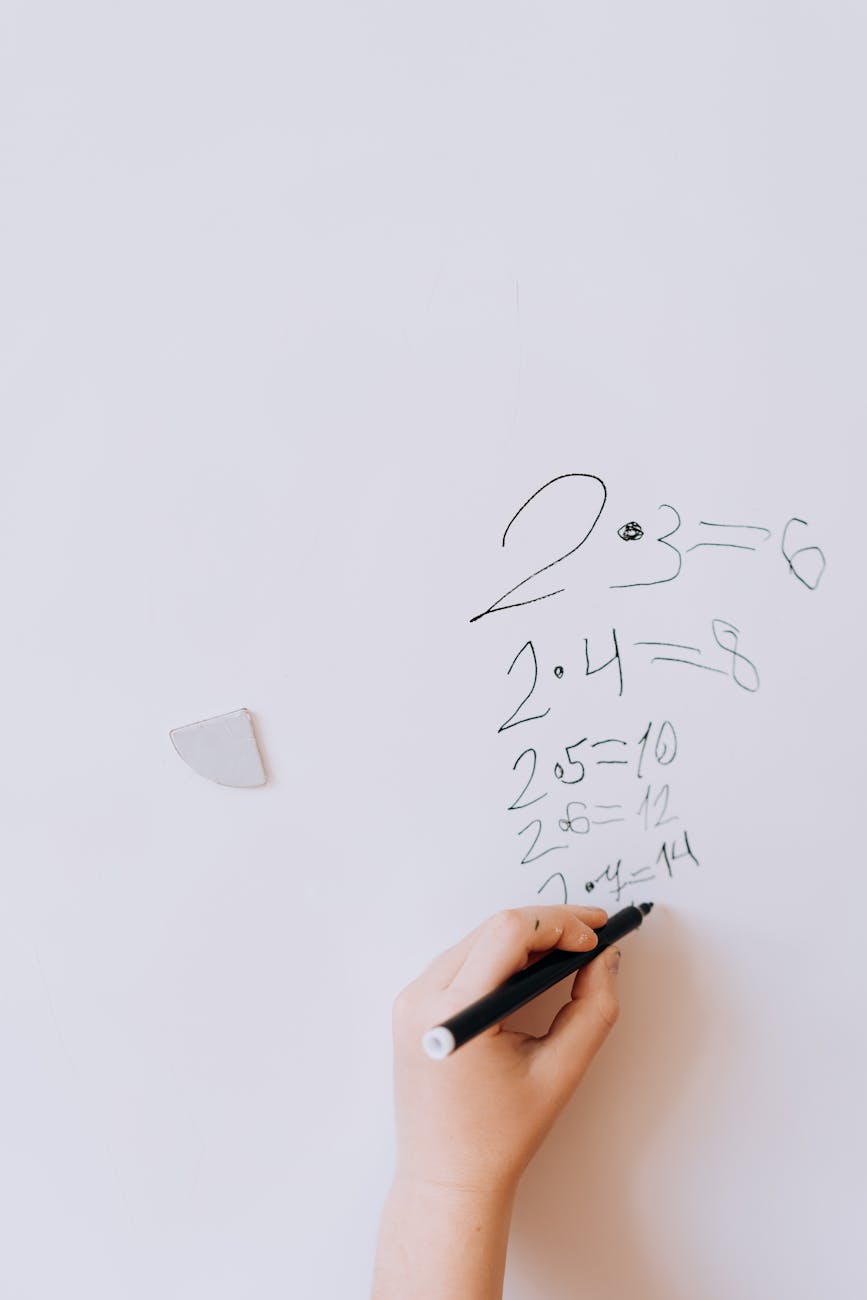
Curriculum for Gifted and Advanced: Project LIFT Free K-3 Math Resources

Photo by Mikhail Nilov on Pexels.com

Great math instruction for gifted and high-potential learners goes beyond procedural fluency. It invites students into mathematical reasoning, problem solving, and discourse. Project LIFT Math Lessons are a comprehensive set of free, standards-aligned math lesson plans developed through a Javits Grant by the University of Connecticut’s Renzulli Center for Creativity, Gifted Education, and Talent Development. These lessons are designed to deepen conceptual understanding while highlighting critical and creative thinking in early mathematics classrooms.

What Makes Project LIFT Unique?
The Project LIFT initiative focuses on equipping teachers to recognize and nurture high-potential academic behaviors through thoughtfully designed instruction. In mathematics, this means embedding opportunities for students to hypothesize, justify, represent ideas, and engage collaboratively with peers around meaningful mathematical tasks (read more about Project LIFT here).

Highlights from the Math Lessons
Although the full packet includes lessons spanning early grades, key features include:

  • Clear alignment with grade-level standards while offering rich extensions for deeper thinking.
  • Activities that promote productive struggle and reasoning over rote computation.
  • Tasks structured to encourage mathematical discourse and multiple solution pathways.

Example Task: Counting Cupcakes
One featured example from Project LIFT is “Counting Cupcakes,” a lesson that invites students to explore combinations, patterns, and reasoning through a real-world context. Lessons like this make concepts tangible while encouraging students to explain their thinking and build arguments, which are key components of advanced mathematical reasoning. See more lessons listed in the Project LIFT index.

Supporting Gifted and High-Potential Learners in Math
Teachers can leverage Project LIFT Math lessons to:

  • Observe evidence of high-potential behaviors including problem posing, flexibility of thinking, and persistence.
  • Use rich tasks as entry points for small group extensions or differentiated challenges.
  • Facilitate classroom talk that helps students articulate and critique mathematical ideas.

Strategies for Classroom Use

  • Begin lessons with open questions to activate student thinking and curiosity.
  • Facilitate reflection with prompts such as “How did you approach that problem?” and “Can someone explain another way to solve it?”
  • Use extension prompts to challenge advanced learners without giving away answers.

How to Use It
Project LIFT Math lessons work well in a variety of instructional settings:

  • As enrichment or extension within a general education math block.
  • In gifted pull-out or cluster group settings.
  • As professional learning examples for improving math discourse and task design.
  • For parents or homeschool educators seeking challenging, concept-driven math experiences.

The open-ended nature of the tasks allows teachers to meet students where they are while still pushing thinking forward.

In Sum
The Project LIFT Math lessons are a powerful free resource for educators who want to enliven mathematics instruction with challenge, reasoning, and engagement. Whether used in mixed-ability classrooms or gifted settings, these lessons support deep mathematical understanding and talent development.

Your Turn
Have you used rich math tasks like those in Project LIFT with your students or children? What strategies have helped promote meaningful math discourse? Join the conversation by sharing your thoughts in the comments below. ~Ann


Curriculum for Gifted and Advanced Students: Project LIFT Free K-3 ELA Resources

Photo by Ron Lach on Pexels.com

Gifted and high-potential learners thrive when instruction goes beyond recall to include rich opportunities for critical thinking and creative expression. The Project LIFT ELA Lessons are a free set of English language arts lesson plans developed through a federal Javits Gifted and Talented Students Education Act grant by the University of Connecticut’s Renzulli Center for Creativity, Gifted Education, and Talent Development. These lessons support teachers in infusing discourse, higher-order thinking, and creativity into ELA instruction for primary grades.

What Is Project LIFT?
Project LIFT (Learning Informs Focused Teaching) was funded by the U.S. Department of Education and aims to enhance teacher preparation and practice in recognizing and developing advanced academic potential in early elementary students, especially in traditionally underserved populations. A core part of the project involved developing and sharing lesson clusters in both language arts and mathematics that promote discourse, complexity, and evidence-based thinking practices.

Overview of the ELA Lessons
The ELA packet includes a wide range of lessons for grades K–3 that (see lesson index). They:

  • Align with Common Core standards and promote academic rigor.
  • Emphasize critical and creative thinking within authentic literacy tasks.
  • Provide structured opportunities for students to read, analyze, create, and communicate about text.
  • Highlight observable high-potential behaviors such as fluency with ideas, originality, elaboration, and perceptive reasoning.

Sample Lesson: “What Happened in This Hole?”
One example from the kindergarten lessons invites students to explore a page from The Book with a Hole and use the FFOE strategy (Focus, Fluency, Originality, Elaboration) to generate ideas, draw scenes, and write narratives based on their interpretations. This task is designed to simultaneously build imagination, oral language, text interpretation, and narrative skills—while giving teachers a chance to observe high-potential thinking in context.

Why This Resource Is Valuable for Gifted Learners
The Project LIFT ELA lessons offer several advantages for teachers of gifted students:

  • Ready-to-use lesson structures that embed challenge through questioning, discourse, and creative thinking.
  • Differentiation built in through extension tasks and open-ended assessment prompts.
  • Formative observation opportunities that help teachers document advanced behaviors during classroom learning.

Practical Tips for Implementation

  • Begin by identifying specific high-potential behaviors you want to elicit (e.g., elaboration, resourcefulness).
  • Use the reflection prompts included in lessons to guide student discussion and metacognition.
  • Pair lessons with small group extensions for students ready for deeper exploration.

How to Use It
Teachers, gifted specialists, and homeschool parents can use Project LIFT ELA lessons in several flexible ways:

  • As enrichment lessons embedded within core ELA instruction.
  • During small group instruction to extend thinking for advanced or high-potential learners.
  • As professional learning tools to study questioning strategies and observable gifted behaviors.
  • With homeschool or parent-led learning groups looking for high-quality, research-based literacy experiences.

Because the lessons are free and clearly structured, they are especially helpful for educators who want to increase rigor without having to design tasks from scratch.

In Sum
Project LIFT’s ELA lessons are more than worksheets. They are tools that help educators blend core literacy instruction with the kind of high-level thinking gifted learners need. Grounded in research and designed for classroom use, these free resources are a valuable addition to any gifted or talent development toolkit.

Your Turn
Have you used Project LIFT ELA lessons or similar open-ended literacy tasks with your students or children? What kinds of thinking behaviors did you notice? Share your experiences or questions in the comments below. ~Ann

Curriculum for Gifted and Advanced Students: Websites with Math Problem Solving Resources

Four Free, High-Level Resources to Build Thinking, Reasoning, and Mathematical Confidence

Photo by Peter Kambey on Pexels.com

Great problem solving is not about busy work or rote drill. For gifted and advanced learners, it means rich, open-ended tasks that require reasoning, communication, multiple strategies, and persistence. Ready-made problem-solving resources save teachers time, provide high-cognitive-demand experiences, and offer opportunities for learners to think deeply about mathematics. Below are four excellent free websites with vetted problems that work beautifully in classrooms, enrichment groups, or homeschools.

Robert Kaplinsky Lessons – Real World Problem Solving

Robert Kaplinsky’s library of lessons focuses on real-context problems that invite multiple solution paths and deep reasoning. Rather than traditional word problems with a single strategy, Kaplinsky’s tasks begin with scenarios that spark curiosity and require sense-making. For example, problems such as How Many Hot Dogs and Buns Should He Buy? or How Much Money Do You Earn for a Million Streams on Spotify? ask students to model situations mathematically, analyze data, and justify their conclusions. These lessons are appropriate across grade levels and content areas and are especially effective for grouping learners for discourse and collaboration. Kaplinsky’s work supports the kind of quantitative reasoning and communication gifted learners excel at and enjoy.

Free access Note: All lessons are available to teachers and parents at no cost and can be easily searched by grade band and topic.

YouCubed Tasks – Thinking with Visuals and Number Sense

The YouCubed project from Stanford University offers tasks designed to strengthen mathematical thinking and mindset alongside problem solving. Many tasks use visual patterns, representations, and structure that promote exploration and reasoning before formal procedures are introduced. Because multiple solution methods are encouraged and celebrated, these tasks provide natural differentiation for gifted learners. They are especially effective as warm-ups, discussion starters, or extensions to existing lessons. YouCubed tasks also emphasize a growth mindset approach to math and help students build habits of perseverance and reflection.

3-Act Lessons by GFletchy – Notice, Wonder, and Reason

The 3-Act Framework invites students into problems through curiosity and reasoning. Each task begins with a visual or scenario, prompting students to share what they notice and wonder. Students then work to define the math needed, gather or estimate necessary information, and solve problems with justification. This structure helps students practice productive struggle and sustain thinking on complex challenges. GFletchy’s site curates many 3-Act lessons covering a variety of mathematical concepts and grade levels, making them ideal for whole-class investigations, collaborative groups, or self-directed challenges.

These lessons build thinking habits that align closely with gifted learners’ strengths in exploring multiple solution pathways and articulating reasoning.

Virginia Department of Education Rich Mathematical Tasks – Standards-Aligned and Reasoning-Focused

You know I had to throw in something from Virginia in here! The Rich Mathematical Tasks collection from the Virginia Department of Education offers a bank of standards-aligned tasks organized by grade band (K–12). These tasks were developed by teacher leaders across the Commonwealth to promote sense-making, reasoning, and problem solving. Each task is available as a downloadable PDF with templates, student versions, and in many cases anchor papers and scoring rationales to support formative assessment. Tasks range from Pizza Party and Money in the Piggy Bank (grade 3) to Room for Shoes and Angle Design (grade 5), and all the way up to Algebra II, providing rich opportunities for learners to grapple with ideas and communicate their thinking.

Even though these tasks are designed for on-grade-level math content, they are still ideal for gifted learners because they require reasoning, often have multiple solution pathways, and emphasize discussion and justification rather than rote procedures. In addition, many of the tasks have built-in levels of differentiation for special education, English Learners, and Gifted.

How to Use These Resources

In classrooms:

  • Use a task as a weekly problem challenge or warm-up.
  • Group students heterogeneously to promote discourse.
  • Use journals to capture reasoning and solution strategies.

In enrichment or pull-out programs:

  • Select multi-week task sequences for extended inquiry.
  • Encourage students to generate their own extension problems.
  • Use student work as assessment artifacts for reasoning and justification.

In homeschools:

  • Adapt problems to match interests and pacing.
  • Use tasks as family math investigations or solo thinking challenges.
  • Encourage writing and explanation for deeper processing.

Why These Resources Benefit Gifted Learners

These problem-solving sites benefit gifted and advanced learners because they:

  • Provide high-cognitive-demand tasks that require reasoning and strategy.
  • Invite multiple solution paths, not single answers.
  • Encourage mathematical communication and justification.
  • Are free and ready-to-use, saving teachers and parents planning time.
  • Support persistence, flexibility, and creativity in mathematics.

Rich tasks like these help gifted students deepen their mathematical thinking and build confidence in their abilities.

In Sum

Problem solving is essential for gifted and advanced mathematics learners. Free resources such as Robert Kaplinsky Lessons, YouCubed Tasks, GFletchy’s 3-Act Lessons, and the Virginia DOE Rich Mathematical Tasks provide ready-made, vetted challenges that develop deep thinking, reasoning, and communication. These problem banks are time-savers for educators and fantastic opportunities to extend gifted learners’ mathematical understanding.

Your Turn

Which problem-solving websites or tasks have made the biggest impact in your classroom or homeschool? How do you integrate rich tasks into your instruction to challenge gifted learners? Share your experiences and favorite tasks in the comments below! ~Ann

Curriculum for Gifted and Advanced Students: Vanderbilt University’s Science & Language Arts Units

Photo by Tima Miroshnichenko on Pexels.com

Gifted learners thrive when science curriculum connects big ideas in science with opportunities to think deeply about content, language, and meaning. Vanderbilt University’s Programs for Talented Youth has published two strong integrated science and ELA curriculum units that do exactly this. These units pair rigorous scientific concepts with meaningful reading, writing, and discussion tasks, making them especially valuable for gifted and advanced learners in elementary grades.

The units are:

  • Interactions in Ecology and Literature (Grades 2–3)
  • Space, Structure, and Story (Grades 4–6)

Both are grounded in research on gifted education and aligned to the Common Core State Standards and Next Generation Science Standards. (Routledge)

Introduction to the Curriculum

Rather than treating science and literature as separate subjects, Vanderbilt’s science units integrate scientific concepts with critical reading, discussion, and writing. Students explore phenomena, interpret texts, and apply scientific reasoning while engaging with literature, art, and informational texts. Each unit uses an essential concept to tie science content and language arts skills together, inviting students to make connections across disciplines.

Description of the Material

Interactions in Ecology and Literature (Grades 2–3)

This unit explores ecology and the concept of interactions among living and nonliving things. Students investigate questions such as Should animals be kept in zoos? and How do humans influence animal populations and habitat? while analyzing fictional and informational texts about ecosystems, food chains, and animal behavior. The curriculum features engaging literature, art, biographies, and multimedia sources to enrich scientific thinking (see the description at Routledge).

Students build understanding through:

  • Science investigations of ecosystems and food webs
  • Text-based discussions connecting ecological concepts to literary ideas
  • Creative writing and argumentation about human impacts on environments

The unit blends science, ethics, and literature in ways that honor students’ higher-order thinking skills.

Space, Structure, and Story (Grades 4–6)

This unit focuses on Earth and space science through the lens of structure and systems. Students explore topics such as spacetime, gravity, the structure of stars and planets, and scientific ideas about black holes, blending them with science fiction, poetry, art, and speeches. Texts include a novel study of A Wrinkle in Time, science fiction by classic authors, and informational content about orbits, relativity, and space exploration. Students examine how scientific structures are described in texts and how those descriptions relate to evidence and scientific reasoning (see the description at Routledge).

Key features include:

  • Inquiry tasks about gravity, orbits, and spacetime
  • Critical reading of science fiction and informational texts
  • Integrated writing tasks that require evidence-based explanations

How to Use It

Both units can be used flexibly across instructional settings:

  • Gifted pull-out or enrichment groups: Integrate units over several weeks as interdisciplinary modules.
  • Cluster or advanced classrooms: Use units to supplement core science or ELA curriculum with deeper, connected thinking tasks.
  • Homeschool environments: Use as complete units or adapt lessons into thematic study cycles with hands-on activities.

Teachers can adjust pacing based on student readiness, allow small group discussions, and incorporate student presentations or projects to deepen engagement.

Why It Benefits Gifted Learners

These integrated units benefit gifted students by:

  • Encouraging science reasoning with literature and discourse
  • Promoting conceptual depth and transfer across domains
  • Developing critical interpretation of scientific and narrative texts
  • Supporting evidence-based writing and argumentation

Gifted learners often think in interdisciplinary ways, and these units honor that strength by weaving science content and literature analysis skills into meaningful, open-ended tasks.

In Sum

Vanderbilt’s Interactions in Ecology and Literature and Space, Structure, and Story curriculum units provide rich, integrated pathways for gifted learners to explore science and literature together. They help students build sophisticated scientific understanding while sharpening reading, discussion, and writing skills.

Your Turn Integration of content areas is a powerful way to enhance the rigor of curriculum. Have you used Vanderbilt University’s integrated science and literature curriculum in your gifted classroom or homeschool? How did your learners respond to interdisciplinary study? Share your experiences and tips in the comments below. We’d love to hear from you! ~Ann

Curriculum for Gifted and Advanced Students: Vanderbilt University Language Arts Units

Photo by BOOM ud83dudca5 Photography on Pexels.com

Gifted language arts learners need more than accelerated reading lists. They need deep, concept-driven, text-rich curriculum that supports thinking, reasoning, interpretation, and communication at advanced levels. Vanderbilt University’s Programs for Talented Youth (PTY) offers a suite of Language Arts units grounded in the Integrated Curriculum Model (ICM) that do exactly that while drawing on texts usually available freely online, from public libraries, or through teacher-selected sources. In my school division, we use Vanderbilt Language Arts units throughout our gifted program in grades 2-8, and we even had training from Dr. Tamra Stambaugh when she was still at Vanderbilt (these units were written by her, Dr. Emily Mofield, Dr. Eric Fecht, and Kevin Finn).

Introduction to the Curriculum

Unlike programs that are centered on purchased anthologies or isolated lessons, Vanderbilt’s language arts units are designed to promote big ideas, conceptual understanding, and disciplinary thinking. Each unit is grounded in the ICM framework, which integrates:

  • Advanced content above grade level,
  • Complex discipline-specific skills such as literary and rhetorical analysis, and
  • Connections to concepts across texts, media, and contexts.

These features help gifted learners go well beyond surface comprehension to interpretation, evaluation, synthesis, and application of ideas (see my introductory post about the characteristics of gifted curriculum to learn more about the ICM).

Description of the Material

Vanderbilt’s units are organized around conceptual themes that invite students to explore powerful ideas through multiple texts and lenses. Two examples include:

Perspectives of Power (Grades 6–8) examines the nature of power in literature, historical documents, poetry, art, and speeches. Students analyze how power operates in different contexts, compare viewpoints across genres, and defend interpretations through writing and discussion. This unit incorporates close readings, simulation activities, debates, and performance tasks that require argumentation based on evidence.

I, Me, You, We: Individuality Versus Conformity (Grades 6–8) invites learners to grapple with how identity, society, and personal choice shape one another. Students engage with challenging texts by authors such as Ray Bradbury and Emily Dickinson, analyze primary sources, and consider philosophical questions through Socratic seminars and writing. This unit includes differentiated tasks, rubrics, and formative assessments to support advanced discourse and reasoning (preview the unit).

Other Vanderbilt Language Arts units for gifted and advanced learners are: In the Mind’s Eye (Grades 6-8), Encounters with Archetypes (Grades 4-5), and Transformations in Stories and Arguments (Grades 2-4).

Each unit includes:

  • Essential questions that frame conceptual thinking
  • Close-reading activities tied to textual evidence
  • Structured discussion protocols
  • Writing tasks focused on argument, analysis, and synthesis
  • Choices of performance products that allow students to extend ideas creatively and critically

A key feature of the units are their “Wheels” which can be used for discussion and writing (see this fabulous handout from Vanderbilt’s PTY about “Leading Book Discussions with Complexity,” which features handouts for the Primary Literary Analysis Wheel and an upper grade level Literary Analysis Wheel).   

Because many of the unit’s readings are in the public domain or available online, teachers and homeschoolers can compile rich text sets without purchasing proprietary anthologies.

How to Use It

Vanderbilt language arts units are flexible and can be implemented in:

  • Gifted pull-out or enrichment programs to provide sustained conceptual work
  • Advanced ELA classrooms as semester-long or multi-week modules
  • Homeschool environments where open access to texts and teacher facilitation supports depth
  • Literature circles paired with formative assessment practices

Teachers can adapt units by selecting texts appropriate for student readiness or by integrating supplementary resources that deepen thematic connections.

Why It Benefits Gifted Learners

These units benefit gifted and advanced learners by:

  • Encouraging deep thinking and evidence-based reasoning
  • Building academic discourse and communication skills
  • Supporting writing that argues, analyzes, and synthesizes
  • Connecting literature to real-world ideas, themes, and questions

Because the units are concept-driven and text-rich, they help students become independent thinkers and sophisticated readers and writers.

In Sum

Vanderbilt University’s Language Arts units offer a research-based, concept-focused pathway for challenging gifted learners beyond grade-level expectations. They blend advanced content with critical literacy practices without requiring costly anthologies.

Your Turn

Have you used Vanderbilt’s language arts units or similar concept-based ELA curriculum with gifted students? How did your students respond to the activities in the units? Please share your experience in the comments below. ~Ann

Curriculum for Gifted and Advanced Students: W&M Math Curriculum

Photo by Yan Krukau on Pexels.com

Too often, mathematics curriculum labeled “advanced” simply moves faster through basic skills without offering the depth and complexity that gifted and high-ability learners require. For students who already grasp grade-level content, true challenge comes from meaningful problem solving, conceptual exploration, and opportunities to reason, generalize, and connect ideas across domains.

The William & Mary Center for Gifted Education (CFGE) has developed a robust set of mathematics curriculum resources designed specifically for gifted learners. Grounded in research and the Integrated Curriculum Model (ICM), these materials emphasize advanced content, higher-level thinking, and conceptual understanding rather than acceleration alone (read more about appropriate math curriculum for gifted students).

Introduction to the Curriculum

The William & Mary math curriculum is designed for gifted and advanced learners in grades 3–6 and is organized into units of study aligned to major mathematical domains. The curriculum assumes that students have already demonstrated mastery of grade-level skills and are ready to extend their thinking through challenging tasks and investigations.

According to the Center for Gifted Education, effective advanced math curriculum should feature sophistication of ideas, opportunities for abstraction, and tasks that require reasoning, justification, and transfer. The William & Mary math units were intentionally designed with these goals in mind.

Description of the Material

Grade 3 Math Curriculum for Gifted Students
The Grade 3 units focus on developing strong number sense and early algebraic reasoning through rich problem-solving experiences. Students explore place value, addition and subtraction strategies, early multiplication concepts, geometry, and data analysis in ways that emphasize reasoning and explanation. Lessons push students to identify patterns, justify solutions, and make generalizations rather than simply compute answers. Tasks often require students to represent thinking visually, explain multiple solution paths, and apply mathematical ideas to novel situations, making this level ideal for students who have already mastered basic grade-level skills.

Grade 4 Math Curriculum for Gifted Students
In Grade 4, the curriculum deepens students’ understanding of multiplication, division, fractions, geometry, and measurement while introducing more formal algebraic thinking. Learners investigate relationships between operations, analyze numerical patterns, and begin working with variables and expressions in meaningful contexts. Geometry and measurement units emphasize spatial reasoning and precision, while data analysis tasks require interpretation and justification. Across units, students are expected to articulate reasoning clearly and critique the thinking of others.

Grade 5 Math Curriculum for Gifted Students
The Grade 5 units place strong emphasis on fractions, decimals, geometry, and the foundations of proportional reasoning. Students explore equivalence, scaling, and relationships between quantities using both real-world and abstract problems. Tasks often involve multi-step reasoning, comparison of strategies, and evaluation of efficiency and accuracy. Algebraic thinking becomes more prominent as students analyze expressions, relationships, and patterns, supported by performance-based assessments that require explanation and justification.

Grade 6 Math Curriculum for Gifted Students
Grade 6 units extend students into pre-algebraic and early algebraic reasoning, focusing on ratios and proportional relationships, expressions and equations, variables, statistics, and geometry. Students analyze dependent and independent variables, solve and create equations, and interpret data sets with increasing sophistication. The curriculum emphasizes conceptual understanding over procedural shortcuts, encouraging students to reason abstractly, construct arguments, and make connections across mathematical domains. These units are especially appropriate for gifted learners who are ready for advanced thinking but still benefit from structured exploration and discussion.

The Math Curriculum for Gifted Students series is available through Routledge and Amazon as complete grade-level sets or individual components.

How to Use It

The William & Mary math curriculum can be implemented flexibly across instructional settings:

  • Gifted pull-out programs, where units anchor sustained advanced math instruction
  • Cluster or advanced classrooms, providing depth alongside core instruction
  • Enrichment blocks, offering targeted challenge for small groups
  • Homeschool settings, where the teacher guides and student materials support extended conceptual study

Teachers often select specific units or lessons based on student readiness rather than moving linearly through the entire set. This is exactly how my division uses the units for our gifted math classes.

Why It Benefits Gifted and Advanced Learners

This curriculum benefits gifted learners by:

  • Emphasizing conceptual understanding and reasoning
  • Providing challenging tasks that promote perseverance and creativity
  • Supporting mathematical communication and justification
  • Aligning with standards while extending beyond routine practice

Rather than focusing on speed, the William & Mary math curriculum helps students develop deep, transferable mathematical thinking.

In Sum

The William & Mary Math Curriculum for Gifted Students offers a research-based, thoughtfully designed approach to advanced mathematics for grades 3–6. By combining rigorous content with rich problem solving and reasoning tasks, it supports gifted learners in building confidence, depth, and flexibility in their mathematical thinking.

Your Turn

Have you used the William & Mary math curriculum or other advanced math resources with gifted learners? How do you balance depth and pacing in math instruction? Share your experiences and insights in the comments below! ~Ann

Curriculum for Gifted and Advanced Students: The Jacob’s Ladder Reading Comprehension Program from W&M

Critical Thinking and Reading for Gifted Learners, Grades K–8

Photo by Ron Lach on Pexels.com

Many gifted readers learn to decode and comprehend text with ease, yet still struggle when asked to analyze ideas, evaluate arguments, or synthesize meaning across a text. These advanced reading skills do not always develop automatically. Jacob’s Ladder, developed by the Center for Gifted Education at the College of William & Mary, is a research-based reading comprehension program designed to explicitly teach higher-level thinking through carefully sequenced questioning and discussion.

Introduction to the Curriculum

Jacob’s Ladder is built on a simple but powerful premise. If we want students to think deeply about what they read, we must teach them how to do so intentionally. Designed for gifted and advanced learners in grades 2–8, the program uses short, high-interest reading passages paired with structured prompts that guide students from basic understanding to complex reasoning.

Rather than focusing on speed or quantity of reading, Jacob’s Ladder emphasizes quality of thinking. Students engage in discussion, written responses, and reflection as they learn to articulate ideas clearly and support them with evidence.

Description of the Material

The curriculum is organized into six distinct thinking ladders, labeled A through F. Each ladder targets a specific set of cognitive skills and becomes progressively more complex.

Ladder A: Implications and Consequences
Students examine cause-and-effect relationships, sequence events, and draw conclusions about the implications of actions or ideas presented in a text.

Ladder B: Generalizations
Students organize details, classify information, and develop general statements supported by textual evidence.

Ladder C: Theme and Literary Analysis
Students analyze literary elements such as character, setting, and conflict in order to determine central ideas or themes.

Ladder D: Creative Synthesis
Students paraphrase, summarize, and then create new representations of meaning, often connecting ideas across texts.

Ladder E: Evaluative Thinking
Students examine author purpose, bias, perspective, and the quality of evidence used to support claims.

Ladder F: Metacognition and Complexity
Students reflect on their own thinking, consider alternative interpretations, and justify conclusions with depth and clarity.

Each lesson includes a short reading passage, a sequence of ladder-aligned questions, and guidance for discussion and written response. Materials are available through Routledge Publishing or on Amazon, and many schools use Jacob’s Ladder as a supplemental resource rather than a standalone program.

How to Use It

Jacob’s Ladder is extremely flexible:

  • Use it in small groups with gifted or advanced readers
  • Integrate it into cluster classrooms as targeted differentiation
  • Pair it with novels, science texts, or social studies readings
  • Use lessons in homeschool settings to explicitly teach advanced reading skills

Because lessons are short and focused, they can be implemented without disrupting existing curriculum pacing.

Jacob’s Ladder is a fantastic curriculum to use within talent development programs and for classroom enrichment with gifted cluster teachers or regular education teachers. It was designed as a tool for the regular classroom to challenge students and teach higher level thinking skills in Language Arts. The program the skills, so it is a powerful intervention for supporting rigor and extension in all types of classrooms.

Why It Benefits Gifted Learners

Jacob’s Ladder benefits gifted students by:

  • Making higher-level thinking explicit and teachable
  • Supporting students who read fluently but answer superficially
  • Building academic language, reasoning, and confidence
  • Encouraging thoughtful discussion and evidence-based responses

It is particularly effective for students who need structure to move beyond literal comprehension.

In Sum

Jacob’s Ladder provides a practical, research-based framework for developing advanced reading comprehension and critical thinking skills in gifted learners.

Your Turn

How do you intentionally teach higher-level reading and thinking skills to gifted students? Have you used Jacob’s Ladder or similar tools in your classroom or homeschool? My teachers really enjoy this resource with the support of my gifted staff. Share your thoughts with us in the comments below! ~Ann

Curriculum for Gifted and Advanced Students: W&M Navigators Novel Studies

Advanced Literature Studies for Gifted Learners, Grades 1–12

Photo by Pixabay on Pexels.com

Many gifted readers love novels, but simply assigning harder books is not enough to develop their analytical and conceptual thinking. Gifted students benefit from structured opportunities to explore theme, perspective, and meaning through discussion and writing. The William & Mary Navigators series, developed by the Center for Gifted Education at the College of William & Mary, provides this structure through concept-based novel studies designed specifically for advanced learners.

Introduction to the Curriculum

Navigators are novel-specific instructional guides that support deep literary analysis through essential questions and conceptual lenses. Each Navigator focuses on a single high-quality novel and is designed to help gifted readers move beyond plot into interpretation, synthesis, and evaluation.

The series spans elementary through high school, with titles typically used in grades 1–12, depending on student readiness and instructional context. Novels include a range of genres, cultures, and historical settings, making them adaptable for diverse learners.

Description of the Material

Each Navigator includes:

  • A conceptual framework tied to an enduring theme such as change, identity, power, or survival
  • Pre-reading activities to activate thinking and build context
  • Guided discussion questions that emphasize interpretation rather than recall
  • Analytical writing tasks connected to the essential questions
  • Culminating performance assessments that require synthesis of ideas

For example, a Navigator built around The Giver asks students to explore concepts such as conformity, choice, and freedom. Students analyze character decisions, evaluate societal structures, and consider ethical implications, all while grounding their responses in textual evidence. Other Navigators focus on historical fiction, fantasy, or realistic novels, allowing students to compare how universal themes appear across texts and contexts.

Navigators are available through the “Navigators Heritage Series” Tab on the W&M Language Arts page on Kendall Hunt K-12 Education, making them accessible to schools and homeschool families.

How to Use It

Navigators are highly flexible:

  • In gifted pull-out programs, they work well for small-group literature studies over 4–6 weeks.
  • In gifted collaboration with cluster or classroom teachers, they work well for small-group literature studies over 4–6 weeks.
  • In advanced ELA classrooms, Navigators provide a ready-made structure for literature circles or seminar-style discussions.
  • In homeschool settings, parents can use Navigators to guide deep conversations and written responses while allowing students to read independently.

Because the guides are concise and focused, they pair well with other concept-based curriculum such as William & Mary Literature Units.

Why It Benefits Gifted Learners

Navigators benefit gifted readers by:

  • Promoting deep conceptual understanding
  • Strengthening discussion and argumentation skills
  • Supporting independent interpretation
  • Encouraging students to connect literature to broader human experiences

Rather than rushing through novels, students learn to slow down and think deeply.

In Sum

William & Mary Navigators provide a powerful bridge between independent reading and concept-based literary analysis for gifted learners.

Your Turn

I absolutely loved using Navigators with my gifted students. The questions in them always lead to such deep discussions! Have you used Navigators or other structured novel studies with gifted students? Which novels sparked the richest discussions? Share your suggestions with us in the comments below. ~Ann

Curriculum for Gifted and Advanced Students: W&M Social Studies Units

Photo by Jesu00fas Esteban San Josu00e9 on Pexels.com

Concept-Based Social Studies Curriculum for Gifted Learners, Grades K–8

Social studies is a natural home for gifted education because it invites students to analyze complexity, examine multiple perspectives, and wrestle with enduring questions about human behavior and society. The William & Mary Social Studies Units, developed by the Center for Gifted Education at the College of William & Mary and published through Kendall Hunt K-12 Education, are intentionally designed to cultivate these habits of mind. This concept-based curriculum supports gifted and advanced learners from kindergarten through high school by emphasizing abstraction, inquiry, and historical thinking.

Introduction to the Curriculum

Rather than organizing instruction around timelines or isolated facts, the William & Mary Social Studies Units are built around enduring concepts such as power, change, systems, conflict, culture, and governance. Each unit is framed by essential questions that guide students to examine how individuals and societies respond to challenges over time.

The curriculum spans all grade levels:

  • Primary units (K–2) introduce young learners to concepts such as rules, roles, and community through developmentally appropriate inquiry.
  • Elementary and middle school units (3–8) deepen students’ understanding of historical patterns, economic systems, geography, and civic responsibility.
  • Secondary units (7–12) challenge students to analyze primary sources, evaluate competing perspectives, and consider ethical dimensions of historical and contemporary issues.

Description of the Material

Each unit includes:

  • Clearly defined conceptual goals and essential questions
  • A curated set of primary and secondary sources
  • Structured opportunities for discussion, debate, and analysis
  • Performance-based assessments such as document analysis, research projects, and persuasive writing

For example, in the elementary unit Patterns of Change (grades 3–4), students explore how societies respond to internal and external forces by examining historical events, cultural shifts, and geographic influences. Students analyze biographies, timelines, and maps to identify patterns across time and consider how change impacts individuals and communities.

In the upper elementary and middle school unit The 1940s: A Decade of Change (grades 5–7), students investigate World War II as a catalyst for social, economic, and political transformation. Using primary sources such as letters, photographs, propaganda, and oral histories, students examine how war reshaped roles, power structures, and global relationships. Emphasis is placed on perspective, cause and effect, and ethical decision-making.

Another commonly used middle school unit, Conflict and Cooperation (grades 6–8), asks students to analyze why conflicts arise and how societies attempt resolution. Students compare conflicts across time and cultures, evaluate the effectiveness of different responses, and synthesize their learning through debate, document-based writing, and problem-solving tasks.

At the secondary level, units such as Power and Authority and Systems of Government require students to evaluate political structures, examine competing ideologies, and apply historical understanding to contemporary civic issues. Students are expected to justify interpretations, compare sources, and construct well-supported arguments.

How to Use It

William & Mary Social Studies Units are highly adaptable:

  • In gifted pull-out programs, units can anchor multi-week studies with deep discussion and analysis.
  • In advanced or honors classrooms, they provide a rigorous framework that replaces or enriches traditional social studies instruction.
  • In homeschool settings, parents can use the units as a core social studies curriculum, supplementing with historical fiction, documentaries, and field experiences.

The curriculum is most effective when students have time to explore questions, revisit ideas, and engage in respectful academic discourse.

Why It Benefits Gifted Learners

Gifted students benefit from this curriculum because it:

  • Prioritizes conceptual understanding over memorization
  • Encourages historical thinking and civic reasoning
  • Develops analysis, argumentation, and synthesis skills
  • Supports students in examining multiple perspectives and ethical dilemmas

Students learn to think like historians, geographers, economists, and citizens rather than simply recalling facts.

In Sum

The William & Mary Social Studies Units provide a rigorous, concept-based approach to social studies that challenges gifted learners from kindergarten through middle school to think deeply about the past, present, and future.

Your Turn

There are so many great units in the Social Studies strand from W&M. Have you used any of them or similar concept-based curriculum for Social Studies with gifted learners? Share your experiences and suggestions in the comments below. ~Ann

Curriculum for Gifted and Advanced Students: W&M Science Units

Photo by MART PRODUCTION on Pexels.com

Concept-Based Science Curriculum for Gifted Learners, Grades K–8

Gifted science learners need more than hands-on activities and vocabulary practice. They need opportunities to investigate big scientific ideas, analyze systems, and think like scientists. The William & Mary Science Units, developed by the Center for Gifted Education at the College of William & Mary and published through Kendall Hunt K-12 Education, are intentionally designed to meet these needs. This concept-based science curriculum supports gifted and advanced learners from kindergarten through 8th grade by emphasizing inquiry, abstraction, and scientific reasoning.

Fun fact: I got to pilot the “Models & Populations” unit way back in 1997 with my 7th grade gifted student elective class when I was a Gifted Resource Teacher! It was so cool. The unit has gone through several iterations since then and is now called, Animal Populations. It is a great unit!

Introduction to the Curriculum

The William & Mary Science Units are grounded in enduring scientific concepts rather than isolated topics. Instead of organizing instruction around chapters or discrete standards, each unit centers on a broad idea such as systems, change, models, patterns, or interactions. Essential questions guide student inquiry and help learners connect scientific content across disciplines and grade levels.

The curriculum spans multiple grade bands:

  • Primary units (K–2) introduce young learners to scientific thinking through observation, classification, and questioning.
  • Elementary and middle school units (3–8) deepen understanding of scientific systems, experimentation, and data analysis and challenge students to apply scientific principles to complex problems, ethical considerations, and real-world contexts.

Description of the Material

Each unit includes:

  • Clearly articulated conceptual goals and essential questions
  • A sequence of investigations and inquiry-based lessons
  • Opportunities for data collection, analysis, and interpretation
  • Performance-based assessments such as research projects, models, and presentations

For example, in the elementary unit Systems, students examine how parts interact within biological, physical, and ecological systems. They design investigations, analyze cause-and-effect relationships, and consider how changes to one component affect the whole. At the secondary level, units such as Models and Explanations require students to evaluate scientific models, critique their limitations, and propose alternative explanations using evidence.

The curriculum emphasizes scientific habits of mind, including curiosity, skepticism, precision, and reflection.

How to Use It

William & Mary Science Units are flexible and adaptable across settings:

  • In gifted pull-out programs, units can anchor multi-week inquiry cycles with hands-on labs and discussion.
  • In advanced or honors science classrooms, they can replace or enhance traditional units to provide depth and complexity.
  • In homeschool environments, parents can use the units as a core science framework, supplementing with materials and experiments as needed.

The units are most effective when students have time for investigation, discussion, and reflection rather than rushing to conclusions.

Why It Benefits Gifted Learners

Gifted science students benefit from this curriculum because it:

  • Emphasizes conceptual understanding over memorization
  • Encourages authentic scientific inquiry and reasoning
  • Develops critical thinking and problem-solving skills
  • Supports students in making connections across scientific domains

Rather than learning science as a set of answers, students learn to engage with science as an evolving body of knowledge.

In Sum

The William & Mary Science Units provide a rigorous, inquiry-driven approach to science instruction that honors gifted learners’ capacity for deep thinking, analysis, and exploration from kindergarten through high school.

Your Turn

Have you used William & Mary Science Units or other concept-based science curriculum with gifted learners? What scientific concepts generated the most engagement and discussion? I know when I used these units back in the day, my students loved the problem based learning aspect of them. Share your experience in the comments below. Thank you! ~Ann