Presented by Amanda O’Neil and Bobbie Parmann, Las Vegas Charter School Gifted Educators
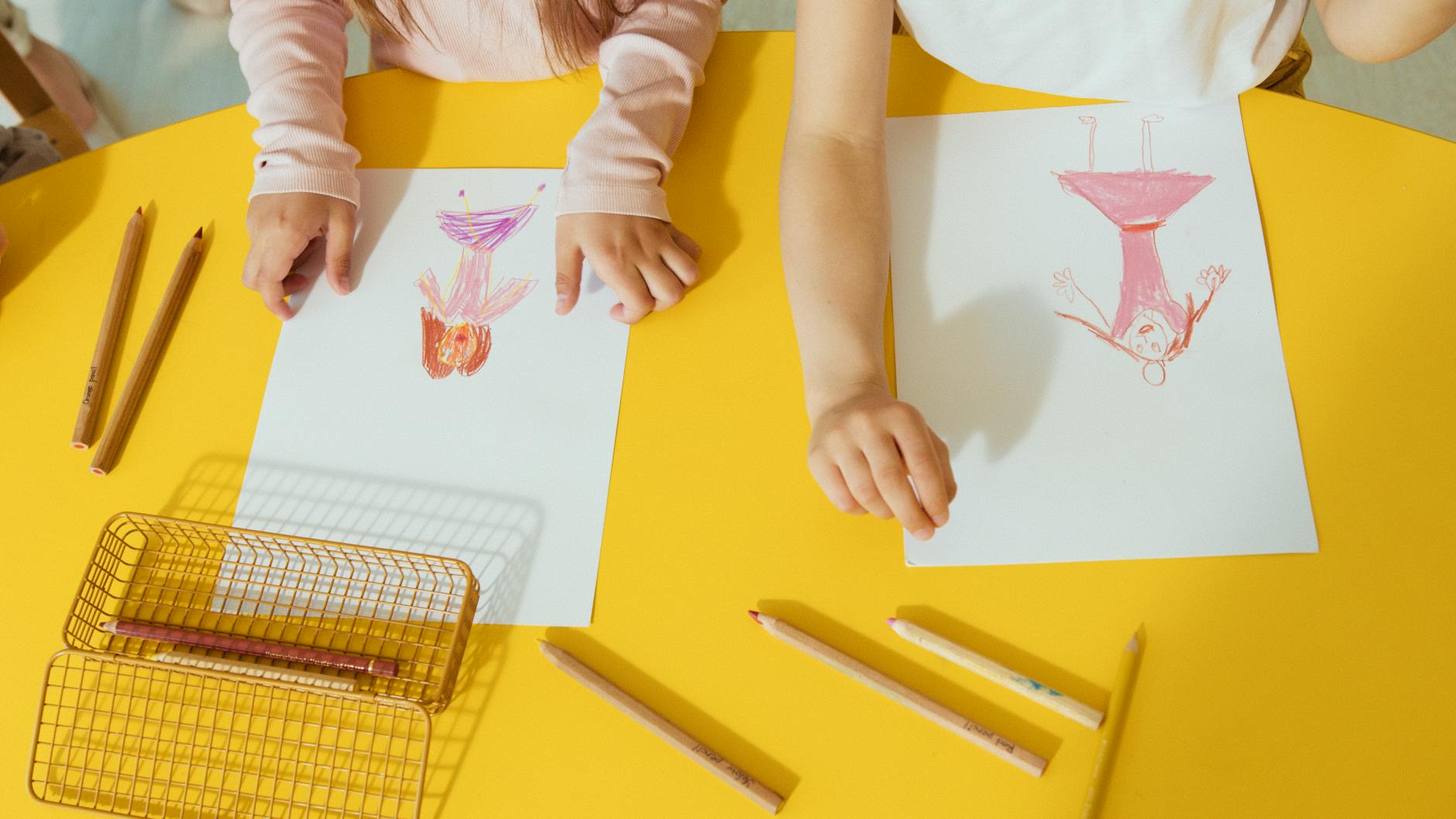
At NAGC25, I had the chance to sit in on a session that reminded me why the arts should never sit on the sidelines of our instructional planning. Amanda O’Neil and Bobbie Parmann shared practical, bite size arts integration strategies they use every day in their fully arts integrated charter school. Their message was clear. When students actively create, interpret, and express ideas through the arts, they deepen their understanding in powerful and joyful ways. The teachers in their building see the difference in student engagement, confidence, and achievement because the arts are used as tools for thinking, not extra activities added to the end of a lesson.
Before diving into specific strategies, the presenters opened with a simple tool many of us know but often forget to use- Mood Meters. These inclusive openers invite every student into the learning space and give them vocabulary for self-awareness. You can make your own or find dozens of examples online. They set the stage for community, emotional regulation, and a classroom culture that values every student’s starting point.
So, why arts integration? Their school is fully immersed in it, and that means they have seen the long-term impact of arts integration first-hand. Arts integration is a teaching strategy that combines an art form with another content area so students can learn and demonstrate their understanding in new ways. The goal is for students to use the arts to make meaningful connections. Research continues to show that students in arts-integrated settings often outperform peers on assessments and tend to have stronger social skills, better behavior, and higher attendance (read a few articles about arts integration here and here and here).
Below are eight bite size strategies shared by O’Neil and Parmann that any teacher can bring into tomorrow’s lesson. They work beautifully for gifted and high ability learners who crave novelty, open-ended thinking, and creative expression.
1. “Reading” Music
Music is a universal language that helps students connect with story, emotion, and tone. This strategy invites students to listen to a piece of music, then answer a series of imaginative questions:
- Is the main character human or not human?
- What kind of clothing might they wear?
- What is the setting?
- What are they doing?
Students essentially craft a narrative from sound. It is perfect for novel studies. You can build a playlist for each chapter and ask students to justify their choices with textual evidence.
2. Portrait Study
Portraits are rich sources of inference, symbolism, and perspective. Students observe a portrait for two full minutes while paying attention to expression, setting, and objects. After students notice details, they discuss what those details reveal. Finally, they link the portrait to their lesson. This can deepen understanding in history, character study, and even science.
3. One Minute Tableau
Students create a frozen scene with their bodies to represent a topic. There is no talking, and each tableau should include a variety of levels.
Steps:
a. Assign a topic
b. Groups plan their roles and poses quickly
c. Students freeze for 10 to 20 seconds
d. Classmates interpret the tableau and connect it to the concept
e. Add options like evidence guessing, thought tapping, or accents
Teachers can use tableaux for character perspectives, historical debates, life cycles, equations in action, shapes, or storytelling sequences. Gifted students especially enjoy the problem solving, physical reasoning, and creativity this requires.
4. Six Word Story
Students summarize a big idea, event, or character arc using only six words. They must include a picture or very intentional facial expression to enhance the story.
Steps:
- Identify the basic theme
- Add imagery and an element of mystery
- Refine tone and depth
Students can illustrate their six word stories or bring them to life through a tableau or short skit. This strategy supports precision, vocabulary, and synthesis.
5. Collaborative Doodle
Each student chooses a colored pencil, draws a noun in the center of the page, then passes it around while others add to it.
Steps:
a. Group 3 to 5 students
b. Draw the noun in the center
c. Pass the paper until each student has contributed
Benefits include stress relief, vocabulary development, visual thinking, collaborative creativity, and perspective taking. This is one of the most versatile brain breaks because it builds community while exercising cognitive flexibility.
6. On and Off
This strategy uses physical expression as a form of response. The teacher gives a prompt, then students demonstrate their answer through facial expressions, poses, size, energy, or levels. This works well in any area of content and is especially useful for kinesthetic learners.
7. Zoom In Picture
Reveal a close up portion of an image related to the day’s topic. Students infer what it might be and how it connects to the lesson. Teachers can then ask specific, open-ended questions about what the students think the image is as more of it is slowly revealed. This supports divergent thinking, abstraction, and careful observation and can be an ideal strategy for warmups or discussion starters.
8. Improvised Expert
Students pretend to be an expert on an invented topic connected to the lesson. They answer classmates’ questions in character while weaving in vocabulary or content knowledge.
Possible imaginary roles:
• Literary Therapist
• Museum Curator from the year 2500
• Animal Communication Specialist
• Expert on why gravity needs a day off
• Museum Lighting Designer for a historical painting
This activity invites humor, encourages risk taking, and builds conceptual understanding through playful improvisation.
Arts integration does not require a full schedule redesign. It starts with small, thoughtful routines that invite students to think and communicate in new ways. These strategies remind us that creative expression is not an add on. It is a pathway to deeper learning for all students and a particularly energizing fit for gifted and high ability learners. Let your next unit begin with a sketch, a song, or a freeze-frame. Your students will surprise you with what they can do! And if you are already integrating arts strategies into teaching and learning in your classroom, please share a strategy or two in the comments below! Thank you! ~Ann
 Teaching for Talent