
Hello, and Happy Summer 2025! I’m re-posting my summer 2024 article about fun ways to keep your gifted child challenged over the summer. As a bonus, in the next six days, I’ll have 6 NEW challenge ideas for you for this summer, based on many years of my teaching and parenting experience. Parents- I hope you have a wonderful, enriching summer with your children! Teachers- same to you, and I hope these ideas might inspire you to adjust them for classroom use next school year! Happy reading, and don’t forget to come back each day for a new summer idea. (Please note: This article contains a few links to Amazon. As an Amazon Associate, I earn from qualifying purchases.)
From Summer 2024…
Hello, and Happy Mid-Summer ’24! My Spring and early Summer was crazy-busy (the most exciting parts of it were our oldest son’s wedding and our youngest son’s high school graduation), but I’m super-happy to finally have a little bit of time to blog again.

Teachers, I know you were ready for a break from your jam-packed school year. Parents, I know you were equally ready to spend quality time with your children without having the demands of school schedules to impact your days. But, once we hit 4th of July, we are halfway through summer, and I’m sure 99% of parents are already hearing, “I’m bored!” from their kids, no matter how happy they are that it’s summertime.
So, what are things teachers might recommend to parents to keep their gifted or potentially gifted children THINKING for the rest of the summer? Here are a few of my favorite things that I used to share with parents back when I was a teacher of the gifted, though my ideas are appropriate for ANY child of ANY age. I also added a few newer ideas that I have, as well. (Please note: This article contains a few links to Amazon. As an Amazon Associate, I earn from qualifying purchases.)
Idea #1:
It’s not too late to join the Summer Reading Program at your local library. It goes without saying that an educator would recommend summer reading! 😊 Most public libraries offer so many free summer activities for children from birth through high school. Kids and teens can read to earn prizes, but there are also book clubs, story time, maker spaces, Lego clubs, guest speakers, crafts, movies, etc.- all offered through your public library. Encourage your children to read non-fiction books, too. Non-fiction reading helps to build background knowledge in your children that comes in VERY handy when they are learning new things in school.
Even if your library does not offer any summer programs for children, you can make up your own Family Summer Reading Program! Whatever you do, know that reading to, and with, your child for even a little bit EVERY SINGLE DAY is one of the biggest return-on-investments that you can get for your child’s future educational outcomes (by the way, you can even read to infants!). Reading and talking about what you read together matters. Cost: FREE
Idea #2:
Do a deep dive in an area of interest. To piggyback a little bit from my non-fiction reading suggestion, figure out a topic that your child loves, and do a deep dive into it. When my middle son was at the end of 2nd grade, he became OBSESSED with the Titanic. The first thing we did was go the library and check out as many books about the Titanic as we could find (even adult non-fiction books, which had great pictures with captions). He literally couldn’t focus on much else for a few months. He read and looked at pictures about the Titanic, he watched documentaries about the Titanic (this time period was the dawn of Netflix streaming!), and he built his own Lego ship model of the Titanic. We took it even one step further one night and had Titanic Night for dinner. I made a fancy meal, we dressed up, we used fancy china dishes that we set in our dining room instead of the eat-in kitchen, and we dimmed the lights and lit candles. We pretended we were rich passengers on the Titanic, eating dinner. It was so much fun! There were a ton of other things we could have probably done along this theme, of course, but what we settled on was so much fun!
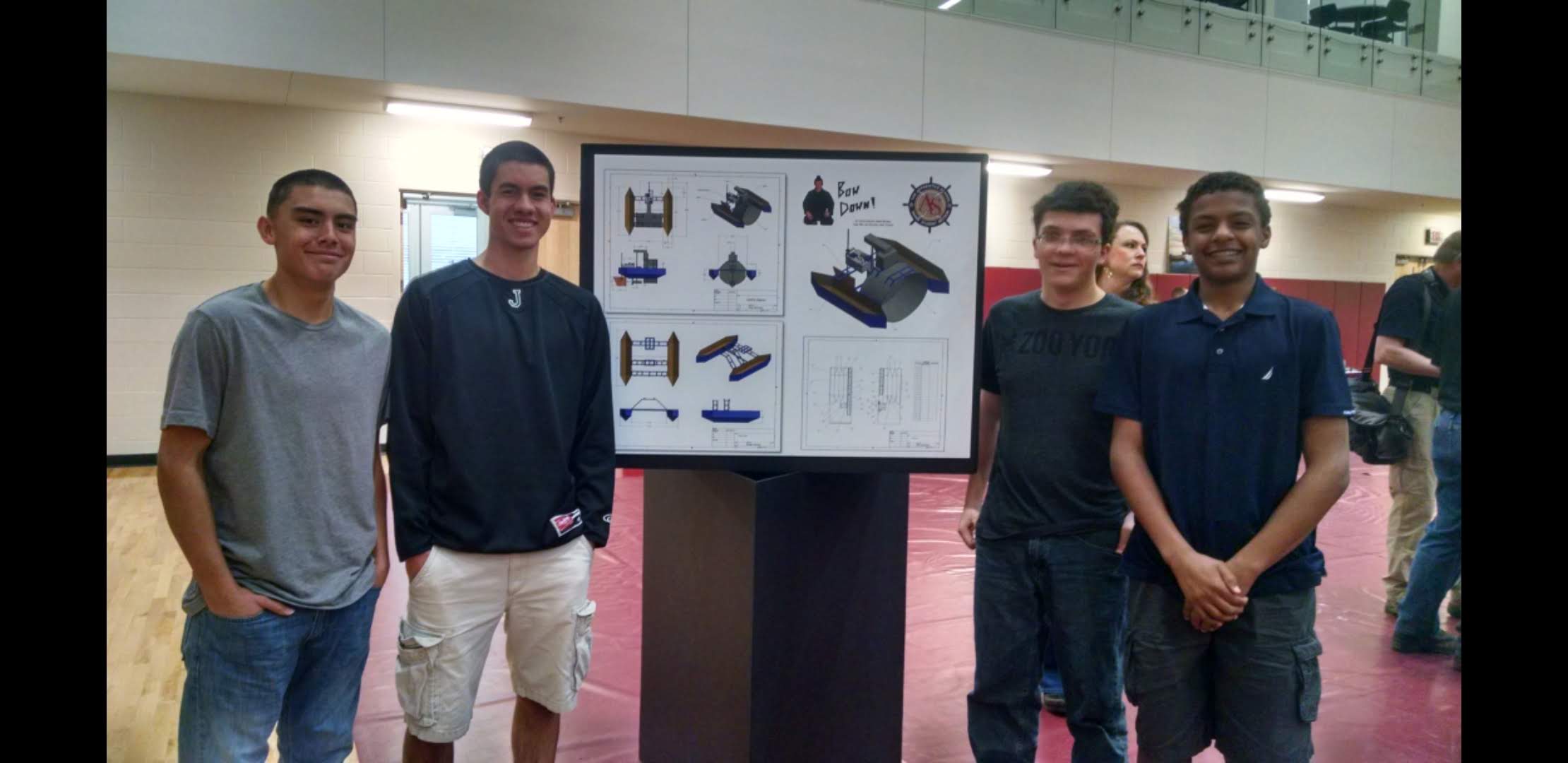
These deep “obsessions” with topics that young children have are often a manifestation of an academic strength area for children. For my son, his “study” of the Titanic at age 8 lead to a deep interest into World War II ships in the summer going into 8th grade (thank goodness for Netflix streaming again!). He spent that summer constructing models out of old aluminum siding strips from Grandpa Colorado’s garage, duct tape, and rivets using my husband’s riveter tool. Then, he would test their ability to float in his bathtub (he also dabbled in WWII plane construction, too). He had a little notebook of ideas that he kept with his designs. Once he got into high school, he took a CAD class (Computer Aided Design) and learned how to use that software to design things like boats. Through that class, he was part of a team competition on boat design for our whole region of schools. He ended up attending one of our country’s five federal service academies. Guess what his major was? Marine Engineering! Guess what he does now? He’s a Marine Engineer! It wasn’t the least bit surprising to my husband or me that this was his career choice. I’m not saying that every child’s early interests will lead to a career (I have the benefit of hindsight from which to draw the connections for my son). I AM saying that we should pay attention to (notice) and do something about (nurture) our children’s passion areas when it’s possible. Cost: FREE (other than scavenged scraps of materials and Netflix subscription costs)
Idea #3:
Play some good, old-fashioned board games– and some online games, too. Board games may seem hard to fit into family time during the school year, but summertime gives us a little more grace. Keep track of wins & losses all summer and you have yourself your own Family Tournament! Some of the board games I always recommended to parents to play with their kids were strategy games are listed below. (Please note: This section contains a few links to Amazon. As an Amazon Associate, I earn from qualifying purchases.)
- Chess– The ultimate strategy game! I first taught my boys chess when they were in 1st grade.
- Apples to Apples- Excellent for learning vocabulary and mastering the art of persuasion. The game comes in a junior level and an adult level, ages 12 and up.
- Scrabble and Bananagrams– Vocabulary-building, spelling, and strategy game- all in one!
- Set Game– Logic at its finest, and there is an online version of this game, too called “Daily SET Puzzle.”
- Monopoly– Love it or hate it (it’s so LONG!), it is great for practicing money skills and gaining a foundational understanding of how real estate works.
- Rush Hour- A fun spatial-relation building game that has varying levels of challenge at the junior level and ages 8+ level.
- Jigsaw Puzzles- Building a regular puzzle on the dining room table also builds spatial-relation skills. There are also great online puzzles you can play each day for free through the New York Times if you make a free account (Soduku, Wordle, Mini Crosswords, Connections, and Strands).
Playing board games together as a family not only develops your child’s strategic thinking ability and skills, but it also deepens your family bond. (If you don’t already have these games, but would like to purchase them, please see my Amazon Affiliate page on Pinterest.) Cost: Free if you already own the games or borrow them
Idea #4:
Go on Family Field Trips. To me, ANY excursion out of the house can be turned into a field trip! 😊 A field trip just means going somewhere for an educational purpose, to observe or do something first-hand, in-person. You honestly could turn your weekly grocery run into a field trip if you include the right elements! Here is a brief example of how to do this:
Element #1: A purpose (to plan the best meals for our family this week using a $100 budget).
Element #2: Background knowledge (watch YouTube videos, talk to different people, read an article together, etc. to learn the best ways to plan meals and use a budget).
Element #3: Choose your destination that will serve the PURPOSE and USE the background knowledge gained (go online and find all of the grocery stores near you and maybe pick a new one to “explore” with your kids for this excursion).
Element #4: Go to the place you picked (go there, do the shopping and price comparison, buy everything, bring it home, and put it away; you could even talk to some of the managers or other grocery store workers in each department to learn about what they do).
Element #5: Process and apply the experience gained from the field trip (talk through what you all learned and make the specific plans to prepare the meals with the food you bought on your field trip).
Element #6: Share what was learned from the field trip (in this case, through the meals your children helped plan, shop for, and maybe even cook!).
Walla! You have a relatively instant field trip that you could throw together in 30 minutes. You could use those 6 elements for so many other family excursions, too!
Cost: Variable, depending on where your field trips are and if you buy anything there
Idea #5:
Create a small business. I know, you’re probably thinking that I’m crazy- my kid is only 12 years old, or 5 years old, or really, just a KID. However, think back to your own childhood. I bet that you- or someone you knew- or a cousin of someone you knew- had a lemonade stand in front their house at least once each summer. THAT is a small business! The sky is the limit now-a-days with the types of businesses kids can start and run, especially using the power of the internet. Why not spend time helping your child figure out what he or she might be able to make and sell or provide a service to sell. Dog walking? Bracelet making? Babysitting? Drawing portraits? Lawn mowing? The possibilities are endless.
While you’re at it, it wouldn’t hurt to help your child to start thinking about financial independence (FI). Quite honestly, our schools are not able to teach students everything that they need to know to access and leverage our economic system. Why not help them at home? A great place to start is with free Pre-K-Grade 12 Financial Literacy curriculum available from the ChooseFI International Foundation. There are also really good books out there that you could read together with your older child. One I particularly liked was, First to a Million: A Teenager’s Guide to Achieving Early Financial Independence, by Dan Sheeks. He also created a companion workbook for teens to use called, First to a Million Workbook: A Companion Guide for Teens to Achieve Early Financial Independence. I read the book, then I gave it to our youngest son for Christmas a few years back. The author also has a robust online community to support teenagers on their journey to FI. Cost: Variable, depending on book purchases and supplies for business start-up costs
Idea #6:
Give your child Incubation Time each day. Okay, I’m sure you are wondering what on Earth is “Incubation Time.” In the creativity research, incubation time is time to do NOTHING BUT THINK AND DAYDREAM. This is a really novel idea in the 2020’s (and even further back, if we are being honest). In our pursuit to give our children all of the experiences and things we feel are necessary to set them up for a successful life, we have inadvertently over-scheduled them (and, I’m not pointing fingers because I was quite guilty of this, too, when my three boys were younger). People, especially kids, need time to do nothing each day. When we have downtime with nothing scheduled, our brain has a chance to actually process things we’ve learned and experienced. When that happens, all of a sudden our brain is able to solve problems that we might have been stuck on or think of new ideas that we never thought of. Downtime is not a waste of time at all- it’s an opportunity for creativity to emerge!
Just to drive home my point a little deeper, I believe that we are all familiar with the concept of downtime. However, as adults, we just have been using it differently- as “veg-out” time. We spend that time scrolling social media or binging Game of Thrones (guilty again 😊). There is a time and a place for veg-out downtime, but please don’t use it to REPLACE incubation downtime, especially for our children.
If you’d like to learn more about Incubation Time and what to do with the ideas that might spring forth from it from your children, there are books available that teachers use. In schools, many teachers tap into this concept of Incubation Time through the use of Genius Hour or Passion Projects. Here a book that I have used to help teachers design Genius Hours in their classrooms, but parents could certainly use it, too: Ready-to-Use Resources for Genius Hour in the Classroom: Taking Passion Projects to the Next Level, by Andi McNair.
I think it would be fairly easy to run Genius Hour in your home during summer break. Cost: FREE, barring the costs for passion project materials that spring out of Incubation Time and if you purchase a Genius Hour book
So, there you have it. Six ideas that cost relatively little to implement and use but pay enormous dividends in family fun and keeping kids’ thinking skills and creativity skills sharp all summer long.
Do any of these ideas resonate with you? What ideas do you have for keeping your gifted child challenged and thinking during the rest of the summer? Please leave a comment for us and post your pictures of family enrichment here. I can’t wait to hear from you! Enjoy the rest of summer! ~Ann

 Teaching for Talent
2 thoughts on “My Favorite Things: Fun Summertime Challenges for Gifted Kids”